






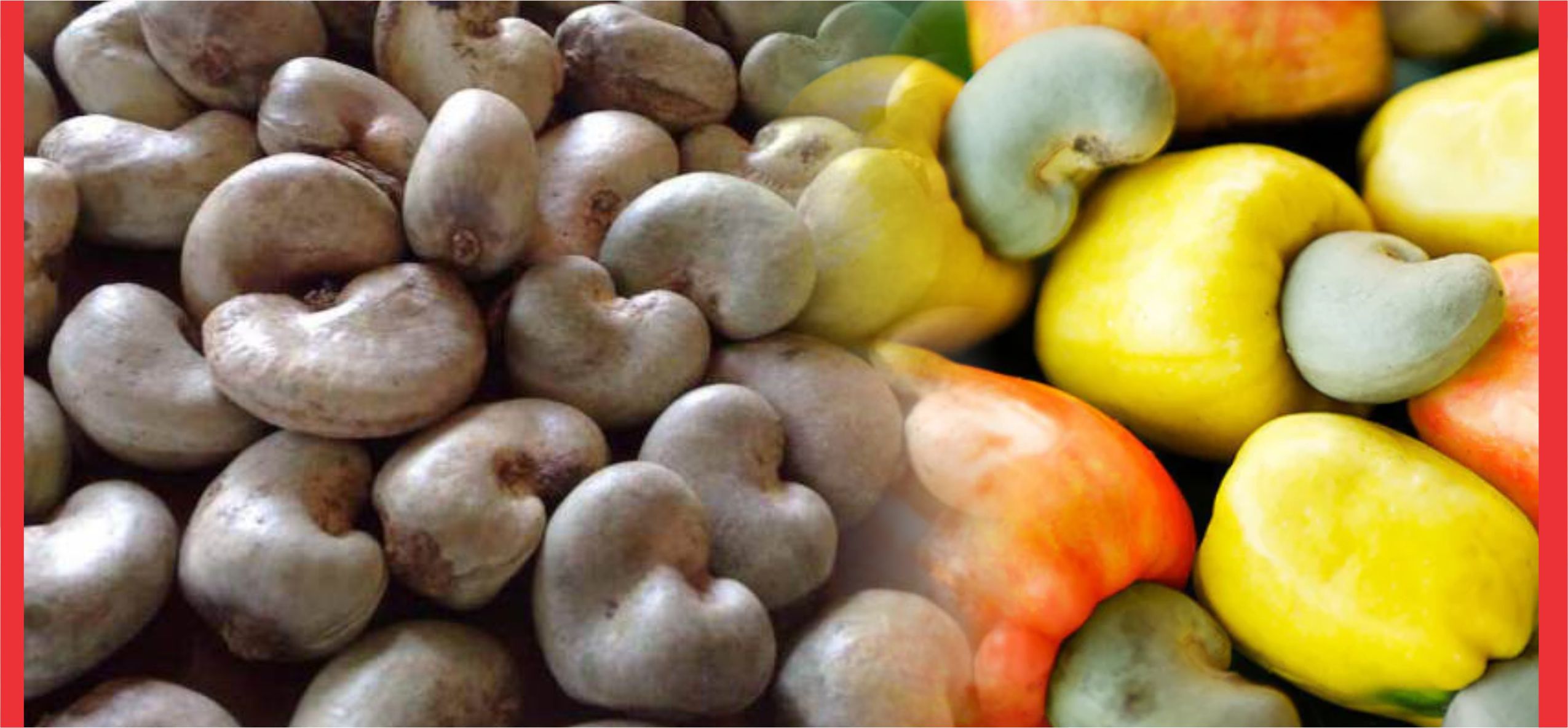
The global cashew market is better described as currently in a recalibration mode rather than a crisis and is expected to stay that way through Q2 2026. At the centre of this shift is Côte d’Ivoire, West Africa’s largest producer, which lowered its official farm-gate price to about CFA 400 per kilogram (roughly $700 per ton) at prevailing exchange levels. That move effectively reset the regional pricing floor and influenced expectations across Ghana, Nigeria, Benin and Burkina Faso.
In Ghana, recent floor adjustments have hovered near the equivalent of $1,300–$1,400 per ton, reflecting a more cautious stance compared to previous seasons.
Internationally, raw cashew nut (RCN) export parity pricing has recently traded in the $1,700–$1,900 per ton range (CNF/FOB basis). For Q2 2026, BuyerMetrics analysis projects raw prices to move within a slightly higher but narrow band of approximately $1,750–$1,950 per ton.
Peak harvest supply across West Africa will likely cap aggressive rallies. However, the reset in producer floors significantly reduces downside risk. In effect, the raw nut market appears to have found a stabilized base rather than a breakout trajectory.
Kernel Markets Hold Firm as Processing Margins Improve
While raw nut prices stabilize below the $2,000/ton mark, processed kernel quotations remain structurally stronger.
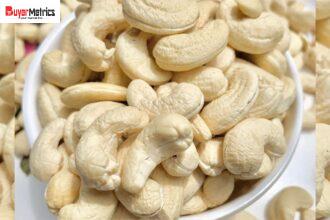
Recent international export offers show W320 kernels trading around $5,500–$6,000 per ton, with Q2 upside potential toward $6,200 per ton. W240 kernels on the hand ranges between $6,800–$7,300 per ton, with premium lots exceeding $7,400 per ton in tight supply windows.
Major demand corridors continue to include Vietnam and India — the world’s dominant processing hubs — alongside re-export and consumption markets in the Netherlands. Global snack consumption remains steady, preventing sharp corrections in kernel pricing despite disciplined procurement strategies by processors.
Related – Nigeria Palm Oil Prices Expected to Stay Strong in Q1 2026
The spread between raw nut input at roughly $1,800 per ton and kernel exports above $5,800 per ton underscores the widening processing margin opportunity. Even after accounting for shelling ratios, wastage, labor, energy and logistics, the value-add differential remains economically compelling.
For Nigeria, which processes only a fraction of its annual cashew output domestically, this spread represents the most strategic lever in Q2. Exporting raw nuts at sub-$2,000 per ton yields limited upside. Processing into kernels priced above $6,000 per ton shifts the revenue equation materially.
BuyerMetrics Bottom Line
Q2 2026 is shaping into a margin redistribution quarter rather than a price spike cycle.
Raw cashew nuts are projected to remain range-bound between $1,750 and $1,950 per ton, supported by lower farm-gate resets and balanced global demand. Kernel grades, particularly W320 and W240, are positioned to hold within $5,800–$7,400 per ton, with a mild upward bias if consumption trends remain stable.
Trader arbitrage margins are likely to compress as producer floors moderate volatility. Processing spreads, however, are improving.
In this cycle, the defining number is not the raw nut price. It is the widening gap between a $1,800 per ton input and a $6,000-plus per ton export output.
That gap will determine who captures value in Q2 2026 and whether West Africa continues exporting potential, or begins exporting finished advantage.