




LAGOS, NIGERIA – Global cashew buyers are closely monitoring weather conditions after fresh assessments flagged High Risk across three major producing countries, raising concerns over nut quality and export-grade kernel supply.
Weather reports by CropGPT released on July 20 identified Ivory Coast, Brazil and Indonesia as facing significant weather-related risks during harvest or nut development, while India remains largely unaffected because its main harvest has already concluded.
Although current forecasts do not point to a major drop in global production, prolonged rainfall during harvest could reduce kernel quality, delay collection and increase post-harvest losses, developments that could influence international trade and prices.
Ivory Coast Faces Harvest Pressure
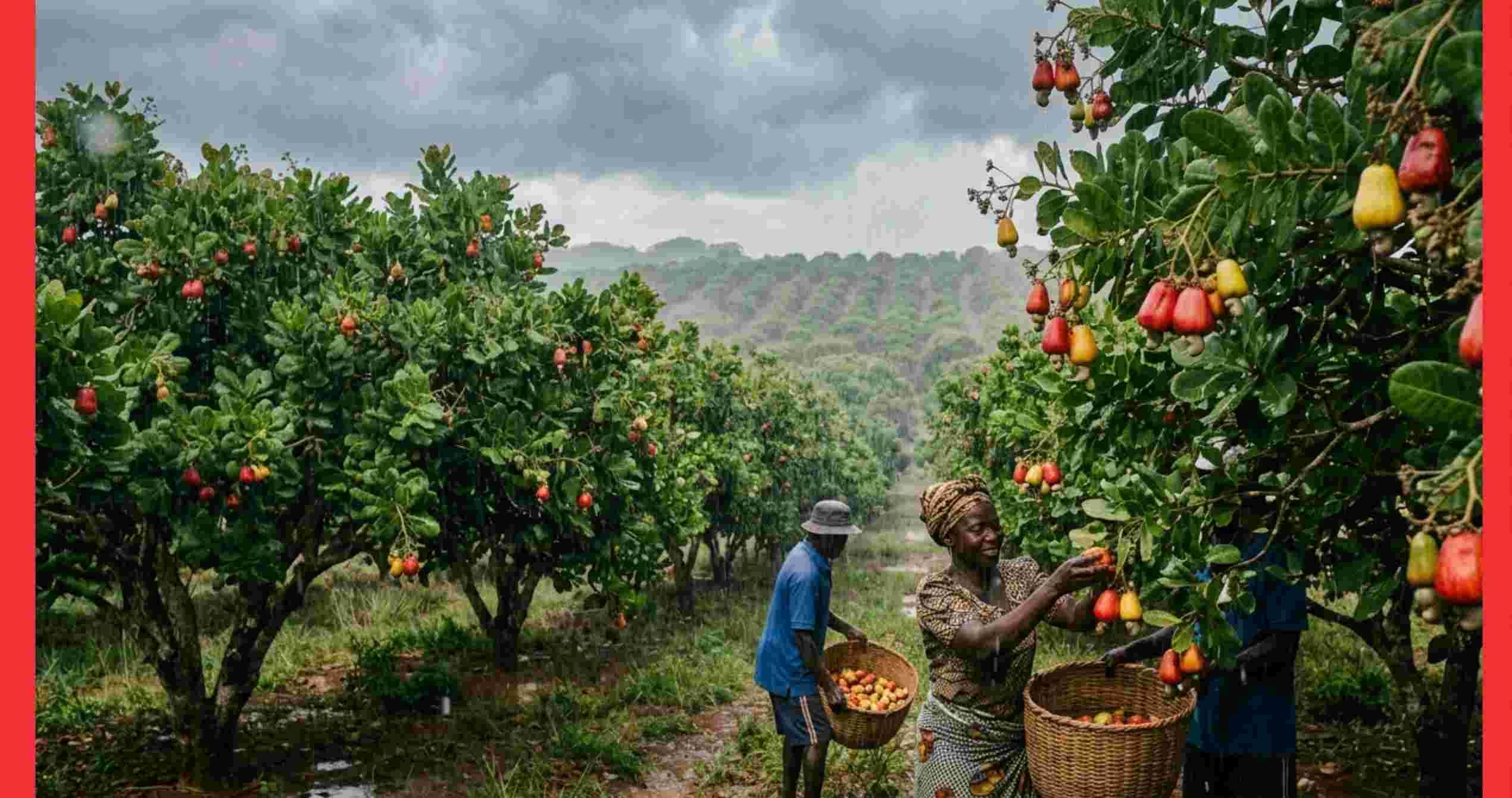
Ivory Coast, the world’s largest producer of raw cashew nuts, recorded above-average rainfall across its main producing regions during the peak harvest period.
Korhogo received 77.34 millimetres of rainfall, about 36% above the long-term average, while Bondoukou and Bouaké also experienced wetter-than-normal conditions.
Harvested cashew nuts require dry weather for proper drying before storage and processing. Excess moisture raises the risk of fungal diseases, mould and kernel discoloration, reducing the proportion of export-quality nuts.
The country’s national assessment classified the outlook as High Risk, warning that continued rainfall could affect quality even if overall production remains strong.
Brazil and Indonesia Report Similar Challenges
Brazil also experienced unseasonal rainfall across major producing states.
In Mossoró, rainfall reached 18.81 millimetres, more than 4,700% above normal, while Aquiraz recorded rainfall over six times its seasonal average.
The wet conditions threaten harvest operations, increase disease pressure and could reduce kernel quality during processing.
Indonesia reported a similar outlook. Mataram experienced rainfall more than 1,200% above average, combined with unusually cool temperatures, conditions that increase fungal disease risks and complicate early harvest activities.
Both countries were classified as High Risk, highlighting growing concerns over the quality of exportable kernels.
India Remains Stable
India presents a different picture.
Despite recording rainfall deficits of nearly 80% in several growing regions, the country’s principal cashew harvest ended months ago.
As a result, current weather conditions pose Low Risk to 2026 supply, although prolonged dryness could influence tree health ahead of the next growing season.
Quality Could Become the Market’s Biggest Concern
The latest weather pattern suggests the biggest challenge for the global cashew market may not be production volumes but quality.
Heavy rainfall during harvest rarely destroys entire crops. Instead, it increases mould, staining and moisture damage, reducing the share of premium kernels available for export.
Lower kernel recovery rates also increase processing costs because more raw nuts are required to produce the same volume of export-grade kernels.
If wet conditions continue over the coming weeks, buyers may face tighter supplies of premium kernels even if total production remains relatively stable.
Implications for Nigeria
The developments could create an opportunity for Nigerian exporters.
With Nigeria’s harvest largely completed, exporters holding high-quality stocks may benefit if buyers diversify away from weather-affected origins such as Ivory Coast, Brazil and Indonesia.
Any sustained decline in export-grade supplies from competing producers could support stronger demand for Nigerian raw cashew nuts and contribute to firmer Free on Board (FOB) prices during the second half of the year.
BuyerMetrics Bottom Line
The emerging risk in the global cashew market is shifting from how many nuts are harvested to how many meet export-grade standards. Simultaneous weather disruptions across Ivory Coast, Brazil and Indonesia could tighten supplies of premium kernels if conditions persist, supporting higher FOB prices and creating an opportunity for Nigerian exporters to strengthen their position in global markets.