Nigeria is looking to Ethiopia’s large-scale agricultural mechanization for blueprint to raise domestic food production, reduce import dependence and attract investment into commercial farming.
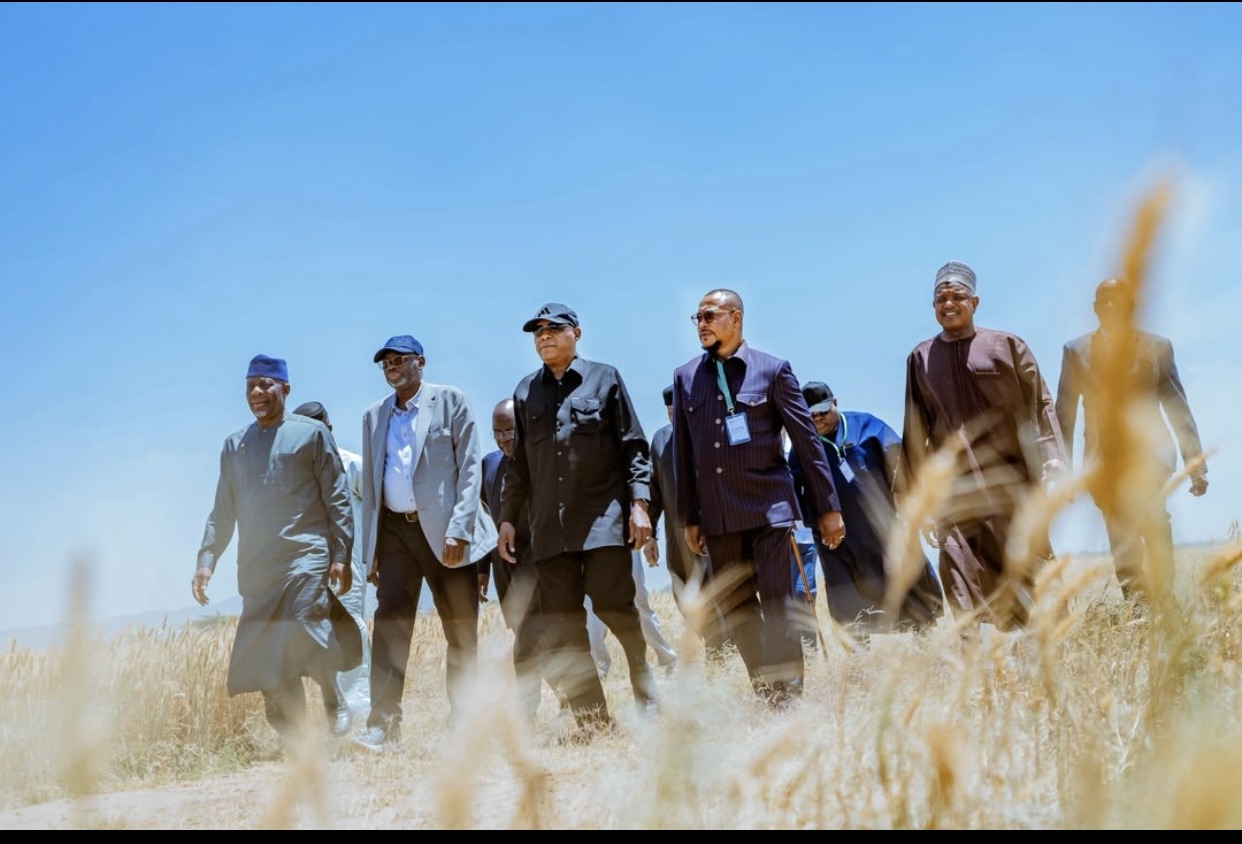
Vice President Kashim Shettima announced the plan during the Ethiopia–Nigeria Leadership Exchange on Thursday, following a tour of farms and agricultural facilities in Ethiopia’s Oromia region.
Shettima said Nigeria intended to learn from Ethiopia’s use of improved seeds, mechanized farming and climate-smart agricultural practices to increase productivity and strengthen food security.
“We intend to embrace improved seeds, mechanisation, and climate-smart agriculture,” he said.
But translating Ethiopia’s reported progress in food production especially on wheat into similar gains by Nigeria will depend on more than mechanization. Irrigation, fertilizer, infrastructure and reliable markets will determine the extent the outcome can be achieved.
Ethiopia’s wheat transformation offers a model
Ethiopia’s reported progress in wheat production provides the central attraction for Nigeria. The country has moved from importing about $1 billion worth of wheat annually to achieving self-sufficiency and generating more than $3.1 billion a year from wheat, according to statements made during the exchange.
Ethiopia’s wheat harvest for 2026/27 agro season is forecast at 7 million tons, up 8% from the 2025-26 estimate of 6.5 million tons. Planted area is seen growing to 2.05 million hectares from 1.95 million hectares.
Ethiopia has also begun exporting surplus wheat to neighbouring countries, including Djibouti and Kenya, while pursuing greater self-sufficiency in rice.
The experience highlights the economic potential of expanding domestic production in a commodity that gulps substantial foreign exchange for imports.
For Nigeria, the opportunity is significant, but the Ethiopian experience is a reference point rather than a ready-made formula. The differences in farming systems, infrastructure, access to water and production costs mean that Nigeria needs to adapt the entire policy approach and execution commitment to its own agricultural system.
Nigeria’s wheat output is rising
Nigeria has already recorded progress in domestic wheat production under the National Agricultural Growth Scheme and Agro-Pocket (NAGS-AP).
The Federal Government reported that annual output increased from approximately 120,000 metric tons to 420,000 tons. That represents a 250% increase from the reported baseline, although the higher production level still needs to be assessed against national consumption and import requirements.
The increase provides a starting point for a broader production strategy. However, higher output alone does not establish self-sufficiency. Nigeria must now expand production sustainably through improved grain quality, reduction in post-harvest losses and ensuring that locally grown wheat can compete with imports on price and processing requirements.
Infrastructure will determine the returns
Shettima said Nigeria was investing in agricultural infrastructure to address supply-chain gaps and logistical bottlenecks, reduce risks for agribusinesses and attract private capital.
These constraints are central to the success of any mechanization programme. Tractors and harvesting equipment cannot deliver their full value if farmers lack access to affordable financing, spare parts, storage facilities, rural roads and buyers willing to purchase their produce.
Ethiopia’s experience therefore raises a wider question for Nigeria: can agricultural policy connect government spending, farmers, equipment providers, input suppliers, processors and export markets into a system that rewards higher productivity?
Oromia Regional State President Shimelis Abdisa highlighted Ethiopia’s efforts to expand crop production and agricultural exports, including bananas, avocados and coffee. He also disclosed that the region was collaborating with the Dangote Group on fertilizer production for local farmers and expanding its poultry industry.
These developments point to an approach that links farming with industrial activity, input supply and export development rather than treating food production as an isolated sector.
Food security and the investment opportunity
Shettima warned that dependence on imported food could weaken national economic independence, arguing that domestic production was essential to food sovereignty.
For Nigeria, reducing that dependence is critical to conserving foreign exchange and create opportunities for local businesses across the agricultural value chain. But the commercial case will depend on productivity gains that make domestic crops more competitive, not simply on government targets to replace imports.
Public investment is needed to provide infrastructure and reduce early-stage risks. Private capital will be more likely to follow when farmers and agribusinesses can demonstrate viable returns, predictable supply and access to markets.
Shettima also announced plans to plant 20 billion trees during the next rainy season, drawing inspiration from Ethiopia’s Green Legacy Initiative. The proposed campaign is intended to support environmental restoration, employment and livelihoods. Its long-term impact, however, will depend on implementation, tree survival and the availability of land and resources to maintain the programme.
What Nigeria must get right
Nigeria’s increase in wheat output to 420,000 tons is a commendable progress. The next steps are to establish how much domestic demand it meets, raise yields, expand suitable irrigated production and improve the economics of farming and processing.
Mechanization can accelerate this transition, but equipment alone will not deliver it. The decisive factor will be for Nigeria to build a production system in which better seeds, water management, farm infrastructure, financing and reliable markets work together.
In conclusion, Ethiopia offers Nigeria a case study in turning agricultural production into an economic growth strategy. The opportunity is not to copy its model wholesale, but to adapt its lessons to Nigeria’s conditions and connect higher farm output to competitive processing, lower import bills and stronger domestic supply chains.