




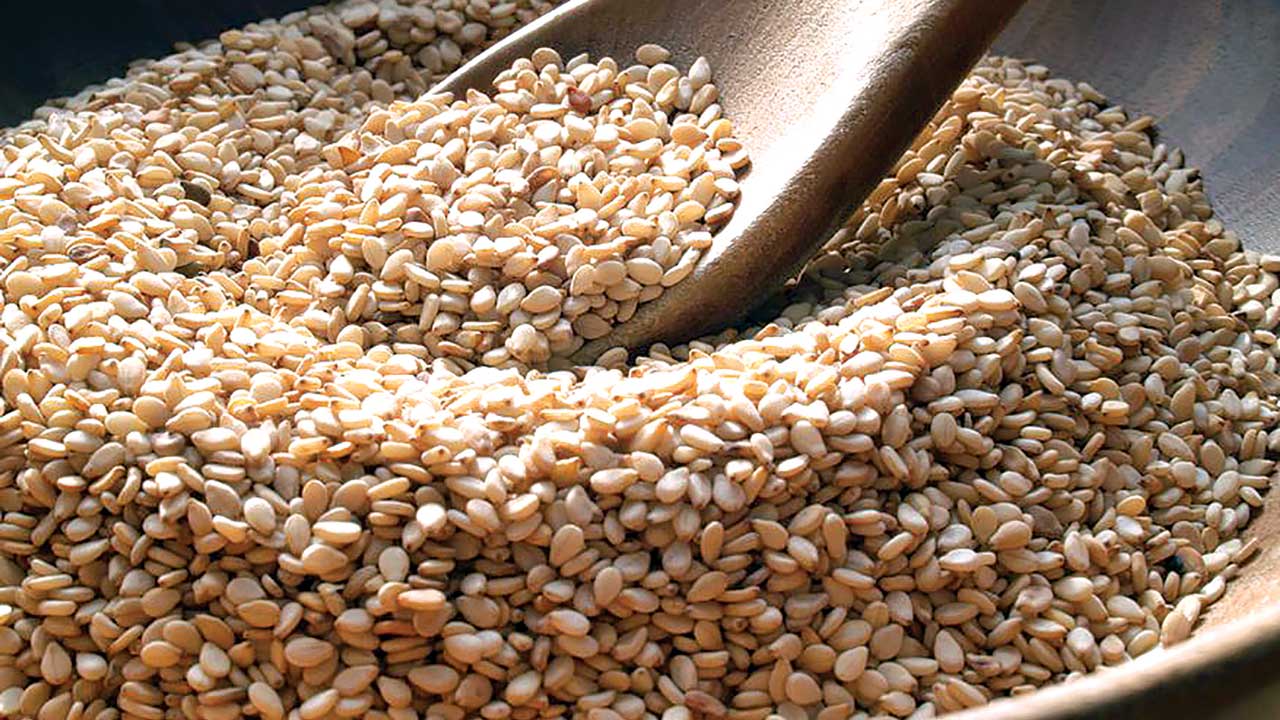
Global sesame demand is entering a decisive transition in 2026, with value increasingly shifting away from raw seed trade toward processed, high-margin applications in pharmaceuticals, cosmetics, and specialized food manufacturing. Market estimates place the global sesame seeds market between $7.6 billion and $11.3 billion in 2026, growing at 2.5%–4% CAGR, while the broader sesame products segment including oil, paste, and extracts is expanding faster at over 5% CAGR, according to analyses from Business Research Insights and TrendVault Research.
This divergence is critical: growth is no longer just about how much of the crop is produced, but how it is processed and where it is applied. This is a shift that exposes structural gaps in Nigeria’s export model, which remains heavily tilted toward raw seed shipments.
Confectionery Anchors Sesame Volume, But Limits Nigeria’s Upside
Confectionery and broader food applications continue to dominate global sesame consumption, providing a stable base for demand. Industry data from Cognitive Market Research and TrendVault Research shows that bakery and confectionery uses, such as sesame-coated snacks and tahini-based products account for the largest share of global usage, with Asia-Pacific contributing close to 45% of total demand.
In 2026, this segment will continue to absorb large volumes, supported by rising demand for plant-based and clean-label ingredients. However, the structure of this demand is largely commodity-driven, relying on bulk raw and hulled sesame.
For Nigeria, this presents a constraint rather than an opportunity. While the country remains one of Africa’s leading producers and exporters, its participation in this segment is concentrated at the low-value end of the chain, where pricing is volatile and margins are thin. As a result, even as global demand grows, value capture remains limited.
Pharmaceuticals Shift the Market to High-Margin Derivatives
The fastest transformation in sesame demand is unfolding in pharmaceuticals and nutraceuticals, where sesame-derived compounds are increasingly used in health and wellness products. Research from Cognitive Market Research highlights rising demand for bioactive compounds such as sesamin and sesamolin, which are linked to cardiovascular and anti-inflammatory benefits.
Industry estimates indicate that the sesame extract market is approaching the $1 billion threshold, driven by expanding use in dietary supplements and therapeutic formulations. This segment is characterized by low volume but high value, as it depends on processed derivatives rather than raw seeds.
Related – Q2 2026 Cashew Price Forecast: West Africa’s Margin Reset Signals A Processing Opportunity
For Nigeria, the implications are significant. The country currently exports the bulk of its sesame in unprocessed form, meaning it captures little of the growing value in extracts and functional ingredients. As global buyers increasingly prioritise refined inputs over raw commodities, Nigeria risks being structurally excluded from the most profitable segments of the market.
Cosmetics Drive Premiumization and Pricing Power
At the same time, the cosmetics and personal care industry is reinforcing a premium layer of demand for the crop. Sesame oil, widely used for its emollient and antioxidant properties, is gaining traction in skincare and haircare formulations as consumers shift toward natural ingredients.
Data from Intel Market Research places the global sesame oil market at over $5.5 billion, with cosmetics contributing to sustained growth. Demand is particularly strong for cold-pressed, organic, and high-purity oils, which command significantly higher prices than conventional products.
This trend is reshaping pricing dynamics across the sesame value chain. Unlike confectionery, where demand is volume-driven, cosmetics introduces quality differentiation and premium pricing, rewarding suppliers with processing capacity and quality control systems.
Nigeria, also, remains largely absent from this segment at scale, with limited domestic processing infrastructure for high-grade sesame oil. This creates a widening gap between global demand trends and local supply capabilities.
BuyerMetrics Bottom Line
The global sesame market in 2026 is undergoing a structural upgrade from a commodity market to a functional ingredients economy, where value is increasingly concentrated in processed applications.
While confectionery continues to anchor demand volumes, the real growth and pricing power is being driven by pharmaceuticals and cosmetics. These segments favour processed sesame derivatives, not raw seed exports.
Nigeria’s current export structure leaves it exposed to this shift. Without significant investment in processing capacity, quality standardisation, and industrial linkages, the country risks missing a widening sesame windfall, even as global demand expands.
The opportunity remains clear but time-sensitive: move up the value chain or remain locked in low-margin commodity trade.