
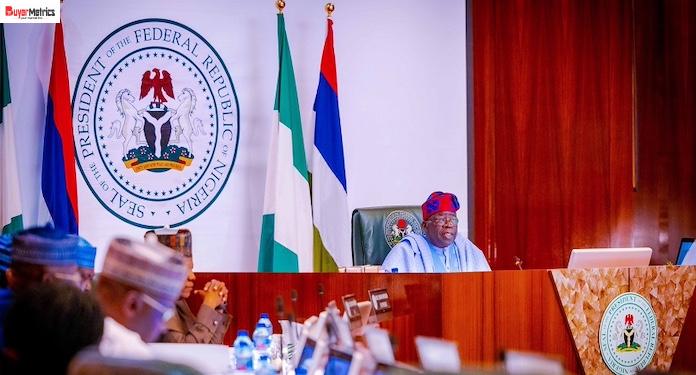
A defining feature of President Bola Tinubu’s administration has been its aggressive revenue drive, marked by hard-edged policies that leave little room for immediate public relief. The president insists these measures are indispensable to Nigeria’s long-term economic transformation. But while revenue mobilization climbs, the pressing question remains: what is being done to ensure accountable and responsible governance?
That question is no longer theoretical. It comes into sharp focus with the rollout of a new tax policy framework, which expanded compliance and pushing Tax receipts higher. Governments are celebrating the prospect of larger monthly inflows from Abuja, and on paper, Nigeria’s public finances have rarely looked this robust. Yet for many citizens, the promise of better services remains largely unrealized, exposing the persistent gap between rising revenues and tangible improvements in daily life.
In 2024, total allocations from the Federation Account Allocation Committee (FAAC) surged to over ₦15 trillion, one of the highest figures in Nigeria’s history. Monthly distributions now routinely exceed ₦1.9 – ₦2.1 trillion, buoyed by higher VAT collections, exchange-rate effects on oil revenue, and the removal of fuel subsidies. States, by any historical standard, are receiving more money than ever.
Yet power supply remains erratic. Roads still fail months after commissioning. Public hospitals remain shadow of themselves and public schools continue to operate far below minimum standards – no teachers, furniture and books. The disconnect is unmistakable: higher revenue has not produced better outcomes.
This is not a revenue problem. It is a governance problem.
Over the past decade, Nigeria has earned trillions of naira from taxes, oil, and shared revenues. But increased inflows have largely financed higher recurrent spending – wages, overheads, and politically convenient and motivated projects rather than productivity-enhancing investments. In many states, capital expenditure remains thin despite record FAAC receipts.
Even with these higher allocations, over 28 of Nigeria’s 36 states still rely on FAAC for more than half of their total revenue, underscoring a deeper weakness: money is arriving, but fiscal discipline and strategic planning are not.
Tax revenue, by itself, is neutral. It can build durable infrastructure, or it can inflate costs, reward inefficiency, and disappear into poorly executed or non-existent projects. Without transparent procurement, credible audits, and consequences for failure, larger budgets simply expand the scale of waste.
Infrastructure spending illustrates the problem. Nigeria budgets hundreds of billions annually for roads, rail, and power, yet abandoned projects dot the country. Contracts are often awarded without rigorous cost control, monitored weakly, and left incomplete with no sanctions. Under such conditions, raising taxes does not accelerate development, it bankrolls dysfunction.
Related – Nigeria Requires Up To $500 Million To Build Vietnam-Scale Cashew Processing, Estimates Show
The same pattern repeats in social sectors. Education and health allocations have grown nominally over time, but outcomes lag far behind peer economies with lower revenues. Classrooms remain overcrowded, teachers underpaid, hospitals understaffed. The constraint is not funding alone, but how funds are prioritized, tracked, and evaluated.
Countries that transformed their economies did not start with large tax revenues. They started with credible governance. Rwanda, Vietnam, and Indonesia focused first on discipline – clear targets, transparent spending, and accountability. Revenue growth followed trust, not the other way around.
Nigeria’s cycle runs in reverse. Citizens are asked to pay more taxes while seeing no action towards prudence and accountability talk less of improvement in daily life. Trust erodes. Compliance weakens. Governments respond by squeezing the same narrow base harder, mistaking extraction for reform. The argument from the government is; pay more tax so we can serve you better.
Which is easier? Why not show prudence with the more you have received already? How do you explain the forgiveness of sins of those that truly looted the treasury for ‘only falling in line with the new song’?
The simple question from Rufai Useni; ‘what is the cost per kilometer of Lagos-Calabar coastal road?’ was viewed as arrogance by the current Minister of Works. Are not government officials apprehensive at the slightest probe into transparency?
Breaking the cycle requires a shift in focus. The central question is not how much more can we collect? but how well are we spending what we already have? Publishing detailed project costs, enforcing procurement rules, cutting recurrent excesses, and punishing misuse would do more for development than any new tax instrument.
In reality, high tax revenue can support growth. It cannot substitute for ‘responsibility’ in its sacred meaning.
Nigeria does not suffer from a revenue drought. It suffers from a credibility deficit. Fix governance, and more revenue will make desired impact. Fix revenue alone, and same story will remain and maybe only change scene.