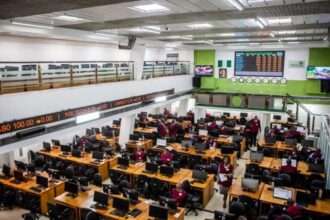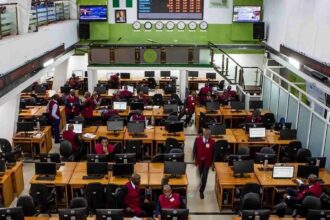






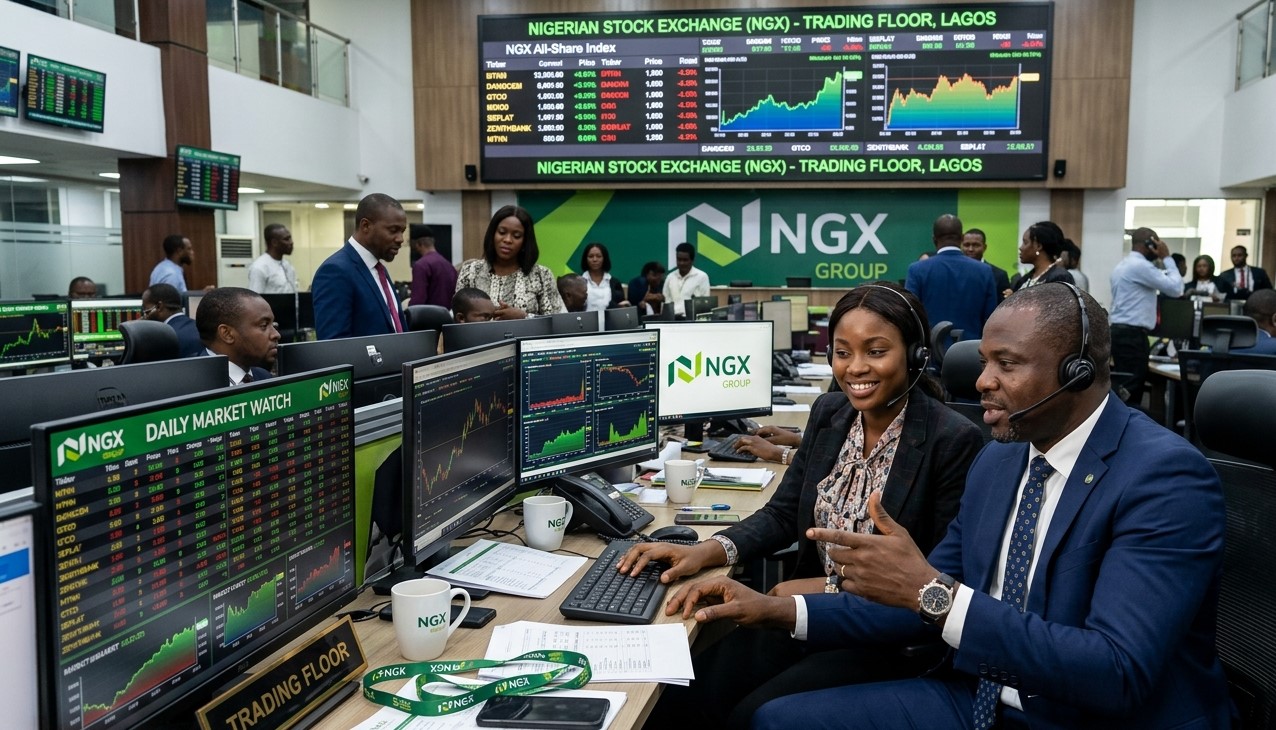
The Nigerian Exchange (NGX), according to its weekly report, delivered one of its busiest trading weeks of 2026, with investors exchanging 5.12 billion shares valued at ₦404.76 billion in 285,223 deals, surpassing the previous week’s ₦306.14 billion turnover. Yet despite the surge in market activity, the NGX All-Share Index (ASI) declined 0.84% to 245,283.68 points, while market capitalization slipped 0.79% to ₦158.33 trillion.
The divergence between record trading activity and falling prices is the week’s defining market signal.
Rather than pointing to a collapse in investor confidence, it suggests the market is entering a phase of portfolio rebalancing, with institutional investors taking profits after July’s strong gains while selectively increasing exposure to companies expected to deliver resilient half-year earnings.
BuyerMetrics Insight: Liquidity Remains Strong, but the Rally Is Losing Breadth
The most important takeaway from this week’s trading is not that the market declined. It is that liquidity continued to improve even as market breadth deteriorated.
Weekly turnover increased by more than 32%, indicating that capital remained active on the Exchange. However, only 33 stocks advanced, compared with 56 decliners, a sharp reversal from the previous week when gainers comfortably outnumbered losers.
This combination of rising turnover and weakening market breadth typically reflects a more selective market, where investors rotate capital between sectors rather than withdraw from equities altogether.
For investors, it is an early indication that the broad-based rally seen earlier in July may be giving way to an earnings-driven market in which stock selection matters more than overall market direction.
Financial Stocks Still Attracted Most Institutional Capital
Despite the broader pullback, banking and financial stocks remained the centre of market activity.
The Financial Services sector accounted for 3.92 billion shares worth ₦271.43 billion, representing 76.55% of total trading volume and 67.06% of total market value. Meanwhile, First Holdco Plc, AVA Capital Plc and Access Holdings Plc together contributed 45.09% of total volume traded and 55.53% of transaction value, highlighting continued institutional preference for highly liquid financial stocks.
While financial stocks continued to dominate turnover, their strength was insufficient to offset broader weakness across the market.
July Rally Meets Its First Test
After posting strong gains throughout July, the market finally encountered meaningful resistance.
The NGX All-Share Index ended the week lower, while most sectoral indices also declined. Only the NGX Premium Index, NGX Insurance Index and NGX Sovereign Bond Index closed higher, underscoring the increasingly selective nature of investor positioning.
Nevertheless, the benchmark index remained 6.92% higher for the month, indicating that the week’s decline represented a moderation in momentum rather than a reversal of the broader upward trend.
Winners Reflect a Shift Beyond Banking
Unlike the previous week, the strongest performers were drawn from a wider range of sectors.
Critical Minerals Financing Corp. led the market with a 22.78% gain, followed by Coronation Infrastructure Fund (+20.92%), Thomas Wyatt (+20.66%), Consolidated Hallmark Holdings (+19.60%) and Lasaco Assurance (+18.68%).
On the downside, Associated Bus Company (-18.44%), Fortis Global Insurance (-16.13%) and Tripple Gee & Company (-15.54%) recorded the steepest losses as profit-taking intensified across selected counters.
What Investors Should Watch
The market’s next direction will likely be determined by corporate earnings rather than liquidity.
Trading activity suggests investors still have capital to deploy, but they are becoming increasingly selective about where that money goes. Companies that outperform earnings expectations or provide positive guidance are likely to attract fresh institutional demand, while stocks that disappoint may face sharper corrections than earlier in the year.
The coming weeks will therefore test whether July’s rally was the beginning of a sustained bull market or simply a liquidity-driven advance awaiting stronger corporate fundamentals.
BuyerMetrics Bottom Line
This week’s decline should not be interpreted as a sign that investors are abandoning Nigerian equities.
Instead, the data point to a market that is becoming more disciplined. Record trading activity shows liquidity remains abundant, but weakening market breadth suggests investors are no longer buying the market indiscriminately. They are rewarding companies with stronger earnings prospects while taking profits elsewhere.
That transition, from a liquidity-driven rally to an earnings-driven market may become the defining feature of Nigeria’s equity market in the second half of 2026.