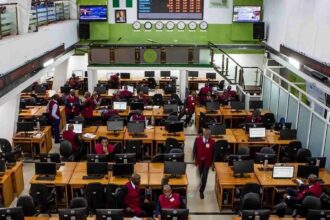







The Nigerian Exchange (NGX) closed marginally lower on Monday, with investors adopting a cautious stance after months of strong gains that have pushed the market to record levels.
The NGX All-Share Index (ASI) declined by 113.47 points, or 0.05%, to close at 244,738.74, while market capitalization fell by approximately ₦72.7 billion to ₦156.97 trillion.
Mahttps://afx.kwayisi.org/ngx/rket breadth was negative, with 37 stocks declining against 36 gainers, reflecting cautious sentiment among investors despite the relatively modest decline in the benchmark index.
The decline coincided with a retreat in global oil prices, with Brent crude falling toward $84 per barrel amid easing concerns over potential supply disruptions in the Middle East. Lower oil prices are being closely watched by investors given their implications for Nigeria’s export earnings, foreign exchange inflows, and fiscal outlook.
Despite the decline, the market remains near record highs after delivering strong gains in 2026, suggesting that recent losses may reflect profit-taking rather than a significant shift in investor sentiment.
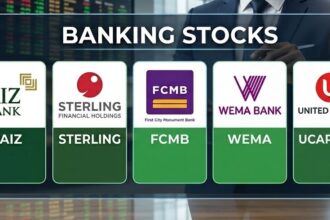
Banking Stocks Remain in Focus
Investor attention continues to center on banking stocks, which have been among the market’s strongest performers this year, supported by robust earnings expectations and ongoing interest in high-dividend counters.
Market participants are also monitoring developments in the oil market and broader macroeconomic indicators for clues about the sustainability of the current rally.
BuyerMetrics Insight
The NGX’s 0.05% decline was modest, but it highlights growing investor caution as global markets adjust to lower oil prices.
With Brent crude retreating and profit-taking emerging after months of gains, investors appear to be reassessing valuations while remaining broadly constructive on the market’s longer-term outlook.
For now, the numbers suggest consolidation rather than a reversal, with the NGX continuing to trade near historic highs despite increasing external uncertainties.