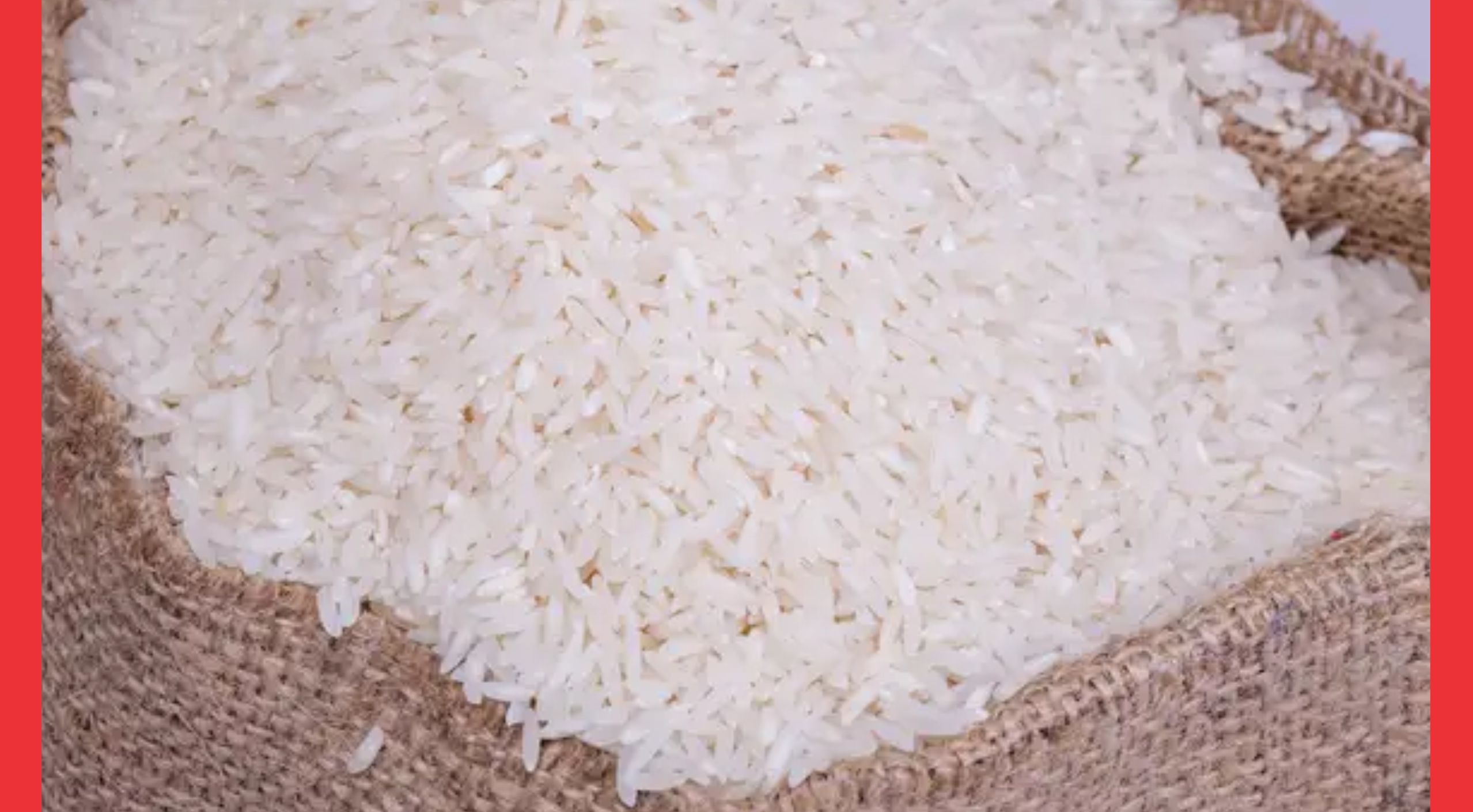
Africa now accounts for 41% of Thailand’s rice exports, making the continent the country’s biggest regional market, according to the latest USDA Foreign Agricultural Service report from Bangkok.
The development marks a significant change in Thailand’s rice trade. Iraq, traditionally Thailand’s largest single market, imported only 90,000 metric tons between January and May 2026, compared with its normal annual demand of around 1 million MT.
African and Southeast Asian buyers have progressively filled the gap.
Africa’s rise did not start this year
The latest 41% share is part of a broader expansion in African demand for Thai rice.
In 2024, African countries imported a record 3 million MT of Thai rice, up 23.3% from 2023 and more than double the 1.09 million MT recorded in 2022.
Africa accounted for roughly 30% of Thailand’s total rice exports that year.
Five markets drove more than 70% of those African purchases: South Africa, Senegal, Côte d’Ivoire, Mozambique and Benin.
South Africa alone imported 833,184 MT, followed by Senegal at 461,804 MT, Côte d’Ivoire at 310,839 MT, Mozambique at 287,125 MT and Benin at 286,649 MT. The figures were reported from Thai Rice Exporters Association data compiled by Agence Ecofin.
That makes the latest USDA finding more significant. Africa’s share of Thai rice exports has moved from roughly 30% in 2024 to 41% in the latest 2026 data, suggesting that the continent has become an increasingly important outlet for Thai exporters.
South Africa leads the current African market
South Africa remains a major destination.
The latest USDA report puts South African purchases at 43,000 MT in the period covered, ahead of Malaysia at 24,000 MT and the Philippines at 21,000 MT.
The changing destination mix is important because Thailand is not simply increasing exports. It is redirecting its export market.
The collapse in Iraqi demand has created a major hole. African buyers are helping to absorb the supply that would otherwise have gone to one of Thailand’s traditional largest markets.
What African buyers are buying
White rice remains the largest component of Thailand’s export mix, accounting for 45% of export volume.
Hom Mali rice represents 26%, while parboiled rice accounts for another 19%.
The product mix matters for African buyers because Thailand is competing across several segments, while cheaper Indian supply is putting pressure on the lower-grade market.
Thai 5% white rice ended July at $441/MT, after falling from $467/MT at the end of June.
By contrast, 25% white rice continued to decline, reaching $421/MT by July 27. The USDA said continued Indian competition was limiting the lower-grade segment.
The next risk is supply
For African importers, the bigger question may now be whether Thailand can maintain its growing role as a supplier.
Thailand’s Royal Irrigation Department has identified water supply as the central risk to next year’s rice crop. Rainfall from January 1 to July 26 was 10% below normal nationwide. In major rice-growing regions, the deficits were larger; Central region had 19% below normal while East had 18% below normal. Northeast rainfall was 10% below normal also.
The irrigation authority has warned of dry-spell conditions and is prioritizing water for human consumption, cities and towns ahead of farm irrigation.
That has created a new issue for African buyers.
Thailand is becoming more dependent on African demand at precisely the time its ability to produce the next crop is facing greater uncertainty.
Thailand’s exports are still below last year’s pace
The broader export picture also needs context. Thai rice exports excluding Hom Mali reached 117,403 MT in the week ending July 26, above the four-week average of 107,296 MT.
Year-to-date exports stood at 2.825 million MT, compared with 3.509 million MT during the same period of 2025.
The year-on-year gap, however, has been narrowing. It stood at 26% in late May and had narrowed to 19.5% by July 26.
What this means for Africa
The numbers point to a structural change in Thailand’s rice trade.
Africa moved from accounting for roughly 30% of Thai rice exports in 2024 to 41% in the latest USDA assessment. At the same time, the continent’s purchases are helping Thailand compensate for the sharp decline in Iraqi demand.
For African buyers, that growing importance could strengthen their position in Thailand’s export market.
But the supply outlook introduces a new variable. If water shortages begin to affect Thailand’s next crop, African importers could face a market where demand is rising while supply becomes less certain.
BuyerMetrics Bottom Line
Africa is no longer a peripheral market for Thai rice. It has become Thailand’s biggest export destination, taking 41% of shipments. The rise from roughly 30% in 2024 shows how quickly African demand has reshaped the trade. The next question is whether Thailand’s water supply can keep pace with the continent’s growing appetite.
See our coverage on the impact of importation prices on rice in Nigerian market.