The closure of the Strait of Hormuz is rapidly evolving from a geopolitical shipping problem into what the United Nations now describes as a potential global food emergency capable of triggering a worldwide food price crisis within the next six to 12 months.
In a stark warning, the Food and Agriculture Organization of the United Nations said the disruption threatens to ignite a cascading chain reaction across energy markets, fertilizer supplies, crop production and food prices, particularly for vulnerable import-dependent economies across Africa, the Middle East and Asia.
The warning statement released Thursday, comes as global markets are already showing signs of strain.
According to the FAO, its Food Price Index has now risen for three consecutive months, driven partly by rising energy prices and supply disruptions linked to escalating tensions in the Middle East. Officials say the situation risks becoming far more severe if governments and global institutions fail to intervene quickly.
FAO Chief Economist Maximo Torero warned that countries must urgently strengthen their “absorption capacity” and resilience before the shock fully spreads through global food systems.
“The decisions being made now by governments and farmers on fertilizer imports, financing and crop choices will determine whether this becomes a full-scale global food crisis,” the agency warned.
Why the Strait of Hormuz Matters to Global Food Security
The Strait of Hormuz is one of the world’s most critical trade chokepoints, handling a massive share of global oil and fertilizer-related shipments. Any prolonged disruption immediately affects energy prices, transport costs and agricultural input supplies worldwide.
FAO economists say the crisis unfolds in predictable stages:
- Energy prices surge
- Fertilizer costs rise sharply
- Seed and input supplies tighten
- Farmers reduce application rates
- Crop yields decline
- Commodity prices climb
- Food inflation accelerates globally
For developing economies already battling inflation, debt pressure and weak currencies, the consequences are bound to be severe.
Countries heavily dependent on imported fertilizers and food products may face rising import bills, declining domestic production and worsening food insecurity at the same time.
Alternative Trade Routes May Not Be Enough
According to David Laborde, rerouting trade through western Saudi Arabia, the Red Sea and parts of the eastern Arabian Peninsula could help reduce pressure on global supply chains.
However, FAO cautioned that these alternative routes lack sufficient capacity to fully replace Hormuz traffic.
That means avoiding export restrictions may become one of the most important policy decisions governments make in the coming months.
The agency specifically warned against restrictions on energy exports, fertilizers, agricultural inputs and humanitarian food shipments
The concern is that protectionist responses from major producers could intensify shortages and worsen global price spikes, similar to disruptions seen during previous food crises.
El Niño Could Make the Crisis Worse
The situation is becoming more dangerous because of the increasing probability of a strong El Niño event.
El Niño typically disrupts rainfall and temperature patterns globally, increasing drought risks in key agricultural regions.
Related – Global Grain Production To Fall For First Time In Four Years As Food Prices Rise
If weather disruptions coincide with fertilizer shortages and elevated transport costs, FAO says global agricultural production could suffer significantly in 2026 and beyond.
FAO’s Emergency Recommendations
The FAO has now outlined an aggressive multi-stage policy response aimed at preventing a broader collapse in food affordability and agricultural supply chains.
Immediate Actions
The agency urged governments to:
- Secure alternative land and sea trade corridors immediately
- Avoid export bans on food, fertilizer and energy
- Protect humanitarian food flows
- Expand targeted social protection programmes
- Support intercropping systems to reduce fertilizer dependence
- Avoid blanket subsidies and focus aid on vulnerable households instead
The organization also emphasized the importance of digital registries and mobile money systems to deliver emergency support quickly, especially in African economies with large informal agricultural sectors.
Medium-Term Measures
Over the next one to three years, FAO says countries should:
- Expand affordable emergency credit for farmers and agribusinesses
- Use harvest-linked repayment structures
- Increase food and fertilizer import financing support
- Avoid policies that increase food-versus-fuel competition
- Integrate informal farmers into cooperatives and formal systems
- Expand rapid-disbursement financing through multilateral institutions
The agency also recommended combining agricultural loans with guaranteed offtake agreements from processors, aggregators and public buyers to stabilize farm incomes.
Long-Term Structural Changes
The crisis has also exposed deeper weaknesses in global food logistics and supply chain concentration.
FAO says countries must now rethink how food systems are built by:
- Diversifying ports and logistics corridors
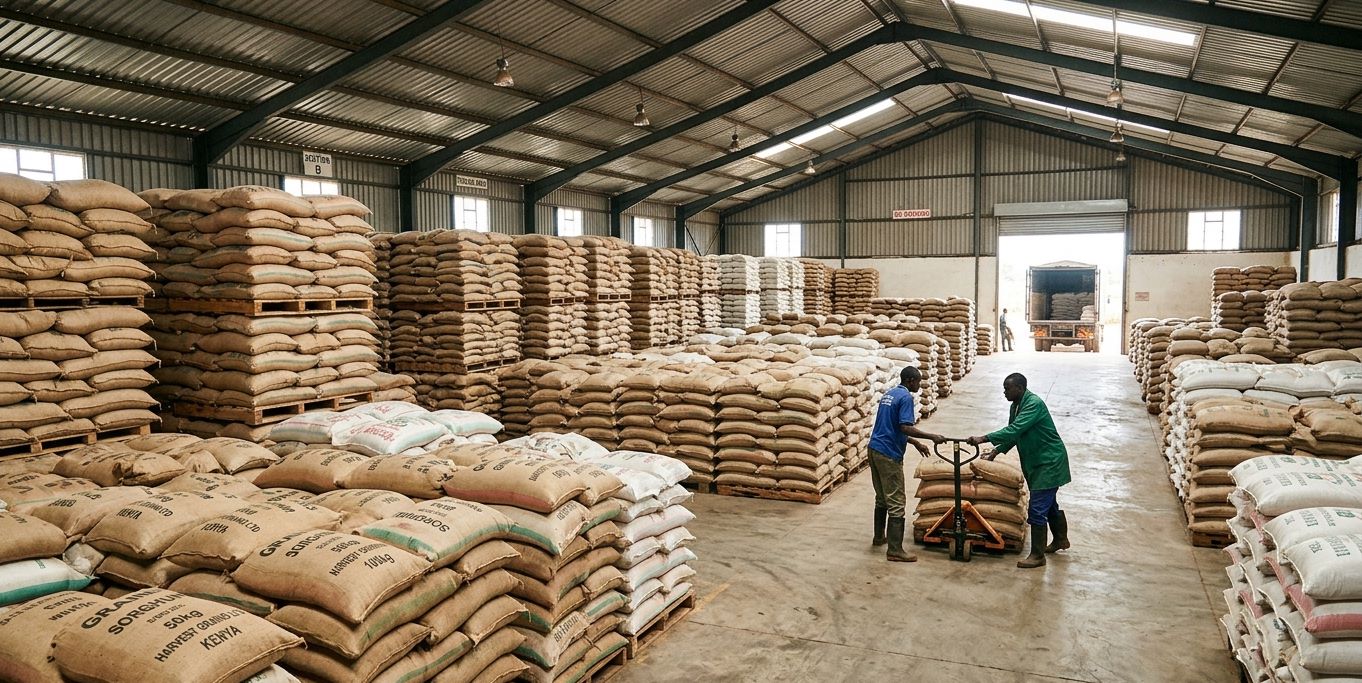
- Expanding storage and warehousing infrastructure
- Accelerating solar and electric-powered irrigation systems
- Investing in precision agriculture technologies
- Improving fertilizer efficiency through soil mapping
- Developing innovation funds for green ammonia and nutrient technologies
- Expanding early warning systems and agricultural insurance programmes
The organization warned that without structural reforms, future chokepoint disruptions could repeatedly destabilize global food systems.
BuyerMetrics Bottom Line
The FAO’s warning signals that the Strait of Hormuz crisis is no longer just an oil-market story — it is becoming a global food security threat with potentially massive inflationary consequences.
For Africa, the stakes are particularly high.
Many countries across the continent rely heavily on imported fertilizers, fuel and food products while also facing currency weakness and fragile fiscal positions. A prolonged supply shock could push food inflation sharply higher, strain government budgets and deepen poverty levels.
The next six to 12 months may determine whether the world experiences a manageable supply disruption or the early stages of another major global food crisis.