



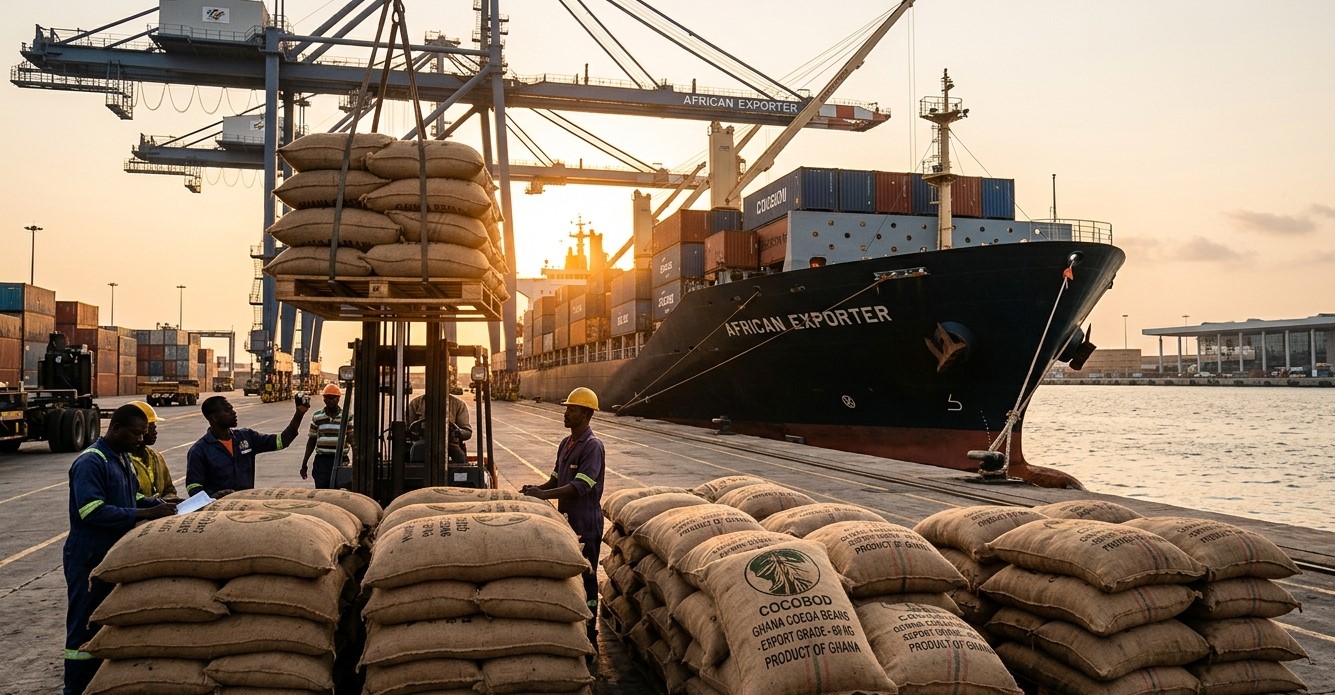
The world’s two largest cocoa producers, Ghana and Côte d’Ivoire, are taking a significant step toward greater control of the global cocoa trade through a coordinated pricing strategy aimed at reducing smuggling, supporting farmer incomes, and stabilizing supply.
While the agreement has been presented as a measure to address challenges within the cocoa sector, could this be a step by cocoa-producing countries towards a position to enable them exert the kind of market influence that oil-producing nations have achieved through coordinated action?
Together, Ghana and Côte d’Ivoire produce more than half of the world’s cocoa beans, making them indispensable to the global chocolate industry. Their latest move suggests a growing determination to translate that production dominance into greater influence over how cocoa is priced and traded.
Why the Alliance Matters
For decades, cocoa-producing countries have remained largely price takers in a market where international traders, processors, and chocolate manufacturers have enjoyed greater influence over pricing.
That imbalance became especially visible during the recent cocoa market upheaval. Cocoa futures on the Intercontinental Exchange (ICE) surged to an all-time high above $12,900 per ton in April 2024, driven by poor weather, swollen shoot disease, and lower-than-expected harvests in West Africa. In February 2026, however, prices retreated to around $2,869 per ton, as inventories improved, certified exchange stocks increased, and demand weakened amid higher chocolate prices.
The challenge for producers is straightforward: they grow most of the world’s cocoa but capture only a small share of the value created across the chocolate supply chain.
Ghana and Côte d’Ivoire account for more than 50% of global cocoa output. However, they capture only a fraction of the estimated $130 billion annual worth of the global chocolate industry. Most of the industry’s profits accrue to processors, brand owners, and retailers located outside producing countries.
By coordinating producer prices and marketing policies, Ghana and Côte d’Ivoire are seeking to reduce that vulnerability.
Is Cocoa Getting Its Own OPEC Moment?
The comparison with OPEC is not perfect, but it is becoming harder to ignore.
The Organization of the Petroleum Exporting Countries gained influence by coordinating supply policies among major oil producers. The group’s ability to act collectively helped it exert greater influence over global crude oil markets.
Ghana and Côte d’Ivoire are not proposing production quotas, but they are pursuing a similar objective: increasing their bargaining power by acting together rather than independently.
The two countries previously collaborated through the Living Income Differential (LID), a premium introduced to improve farmer earnings. The latest agreement goes further by seeking closer alignment of pricing structures and market strategies.
The underlying message is clear: if countries that control more than half of global cocoa production coordinate their policies, international buyers may have fewer opportunities to exploit differences between producing markets.
The Smuggling Problem
One of the immediate drivers of the agreement is the persistent problem of cocoa smuggling between the two countries.
Differences in farm-gate prices have frequently encouraged traders to move cocoa across borders in search of higher returns. The result is a parallel trade that distorts official production figures, reduces government revenues, and undermines national pricing policies.
The problem became particularly visible during the 2024/25 and 2025/26 cocoa seasons. Ghana’s cocoa regulator, COCOBOD, disclosed that thousands of tons of cocoa beans were being moved illegally across borders as traders sought to exploit price differences between neighboring producing countries. Reuters reported in April 2026 that some licensed buying companies in Ghana diverted funds intended for local cocoa purchases to acquire smuggled beans from Côte d’Ivoire, where farm-gate prices had become significantly lower.
The scale of the challenge has been substantial. Ghana’s cocoa production fell from more than 1 million tons in the 2020/21 season to about 530,000 tons in the 2023/24 season, its lowest level in over two decades. While disease, illegal mining, and adverse weather played major roles, industry analysts have also pointed to cross-border leakages as a contributing factor.
Price disparities have at times exceeded 30% to 50% between neighboring markets, creating strong incentives for informal trade. In some border communities, the potential profit from moving cocoa across national boundaries was reportedly higher than the profit available through official marketing channels.
A harmonized pricing framework could reduce those incentives, helping both countries maintain greater control over their supply chains and improving transparency in the market.
What It Means for Global Cocoa Prices
The agreement is unlikely to give Ghana and Côte d’Ivoire direct control over cocoa prices in the way OPEC influences oil markets.
Cocoa remains a globally traded agricultural commodity subject to weather conditions, disease outbreaks, speculative trading, consumer demand, and inventory levels.
However, coordinated pricing policies could make the market less fragmented and provide producers with stronger leverage during negotiations with international buyers.
If successful, the strategy could contribute to:
- More stable producer prices
- Reduced supply leakages through smuggling
- Improved farmer incomes
- Greater predictability in cocoa exports
- Stronger negotiating power for producing countries
For chocolate manufacturers and processors, the development may translate into a market where producers have greater influence over pricing decisions than they have historically enjoyed.
Challenges Ahead
Despite the ambition behind the initiative, significant obstacles remain.
Unlike crude oil, cocoa production is highly dependent on weather conditions and millions of smallholder farmers. Neither Ghana nor Côte d’Ivoire can easily adjust production levels to influence prices.
There is also the risk that sustained higher producer prices could encourage increased production elsewhere, including in countries such as Nigeria, Cameroon, Ecuador, and Brazil.
Market power is strongest when producers control both supply and value addition. While Ghana and Côte d’Ivoire dominate cocoa bean production, much of the higher-value processing and chocolate manufacturing still takes place outside Africa.
Without greater investment in processing capacity, producer countries may continue to capture only a fraction of the industry’s total value.
A Turning Point for Producer Countries
The significance of the agreement extends beyond cocoa.
It reflects a broader trend among commodity-producing nations seeking greater control over the pricing and value chains of resources they dominate.
Whether the initiative ultimately succeeds will depend on the ability of both countries to maintain policy coordination, resist competitive pressures, and balance farmer welfare with market realities.
What is already clear is that Ghana and Côte d’Ivoire are no longer content to be passive suppliers in a market they largely sustain.
BuyerMetrics Bottom Line
The new cocoa pricing alliance between Ghana and Côte d’Ivoire marks one of the most ambitious attempts yet by agricultural producers to strengthen their influence over a global commodity market. While it may not create an “OPEC for cocoa” overnight, it signals a strategic shift from competing for market share to coordinating market power. For traders, manufacturers, and investors, the message is becoming harder to ignore: the countries that grow most of the world’s cocoa want a bigger say in how the market works.