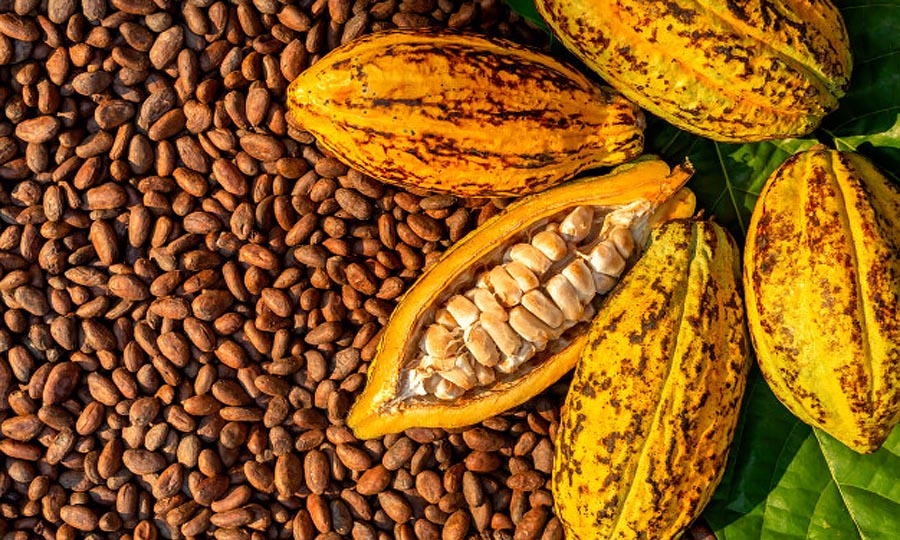
The global cocoa production is experiencing increasing weather risks across several major producing origins, although the nature and severity of the threat vary sharply by region.
According to the information on CropGPT, Ecuador is dealing with excessive rainfall just as its mid-crop season gets underway, while Indonesia’s main cocoa belt is facing prolonged and severe dryness. In West Africa, the picture is mixed, with Ghana and Ivory Coast dealing with moisture deficits and Nigeria facing more localized pressure.
Taken together, the weather outlook points to rising global cocoa supply risk, but not yet to a confirmed global production shortfall.
Ecuador faces excess moisture
Ecuador presents one of the clearest near-term weather concerns. Los Ríos, Guayas and Manabí, the country’s main cocoa-producing provinces, have experienced persistent heavy rainfall over the past two weeks.
Warm temperatures and high overnight humidity are creating conditions favourable to frosty pod and black pod diseases. The timing is particularly important because the trees are moving into flowering and early pod development.
If heavy rainfall continues through October, fungal disease could reduce harvestable pods, while waterlogging could affect farms in low-lying areas. Flooding could also slow the movement of cocoa from farms to collection points.
The immediate risk is therefore not simply lower yields, but a combination of disease, pod losses, quality problems and logistics disruption.
Indonesia’s dryness presents a different threat
The Sulawesi cocoa belt, which accounts for most of the country’s production, has been experiencing a prolonged rainfall deficit. Southeast Sulawesi has been particularly dry.
The timing is again critical. The dry spell coincides with flowering and cherelle development ahead of the main crop, which normally runs from October into the following months.
Insufficient moisture at this stage can cause flowers to abort and young pods to wilt. If meaningful rainfall does not return soon, the damage could extend into the main harvest.
Unlike Ecuador, where excessive moisture is creating disease pressure, Indonesia’s immediate problem is insufficient moisture during pod formation.
West Africa presents a mixed picture
Ghana and Ivory Coast, the two largest cocoa producers, are also dealing with recent rainfall deficits.
Ghana has seen better rains in recent days, providing some relief after a relatively dry period, particularly in the western cocoa belt. The incoming moisture should support pod development ahead of the main crop.
However, Ghana’s production outlook already faces broader pressures. COCOBOD has warned of lower production in the 2026/27 season, citing factors including weather, disease and the production cycle of cocoa trees.
Ivory Coast remains more exposed to accumulated dryness. Rainfall has been below normal across important producing areas for several weeks, raising concerns about bean size and early main-crop arrivals.
Recent showers provide some relief, but they have not completely erased the moisture deficit.
Nigeria’s risk remains more localised
Nigeria’s cocoa outlook is comparatively less concerning at the national level, although some producing areas require attention.
Oyo and Osun experienced a drier-than-normal period during an important part of the pod-filling season. Better rainfall over the past week should support final pod development and ripening.
The main question is whether the earlier dryness has already reduced pod size or pod load.
Conditions in major producing areas such as Ondo and Cross River appear more supportive, limiting the likelihood of a broad national weather-related production shock.
Global Assessment
The current cocoa weather picture can therefore be described as increasingly risky but uneven.
Ecuador is vulnerable to excessive rainfall and fungal disease. Indonesia faces severe dryness at a sensitive stage of crop development. Ivory Coast and Ghana are managing varying degrees of moisture stress, while Nigeria’s concerns appear more concentrated in specific inland growing areas.
The important issue for the cocoa market now is whether these weather patterns persist long enough to translate into actual production losses.
October will be critical. Rainfall in West Africa and Indonesia, disease reports from Ecuador, pod development in Nigeria and the pace of early harvest arrivals will provide a clearer indication of whether the current weather risks develop into a meaningful global supply constraint.