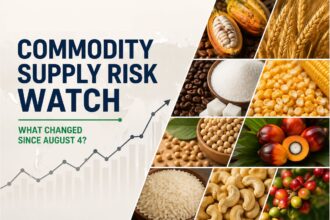
LAGOS, Nigeria – Global agricultural markets are entering a period of mixed fortunes, with some commodities showing signs of improving supply while others continue to face significant production and trade risks.
The latest BuyerMetrics Commodity Supply Risk Watch identifies cocoa as the commodity facing the greatest supply pressure, supported by continued weather uncertainty in West Africa, structural production challenges and still-tight global inventories despite recent improvements in certified stocks.
Coffee and wheat also remain under close watch as weather conditions, export policies and geopolitical developments continue to shape global supply expectations. Meanwhile, improving harvest prospects have eased pressure in soybean and maize markets.
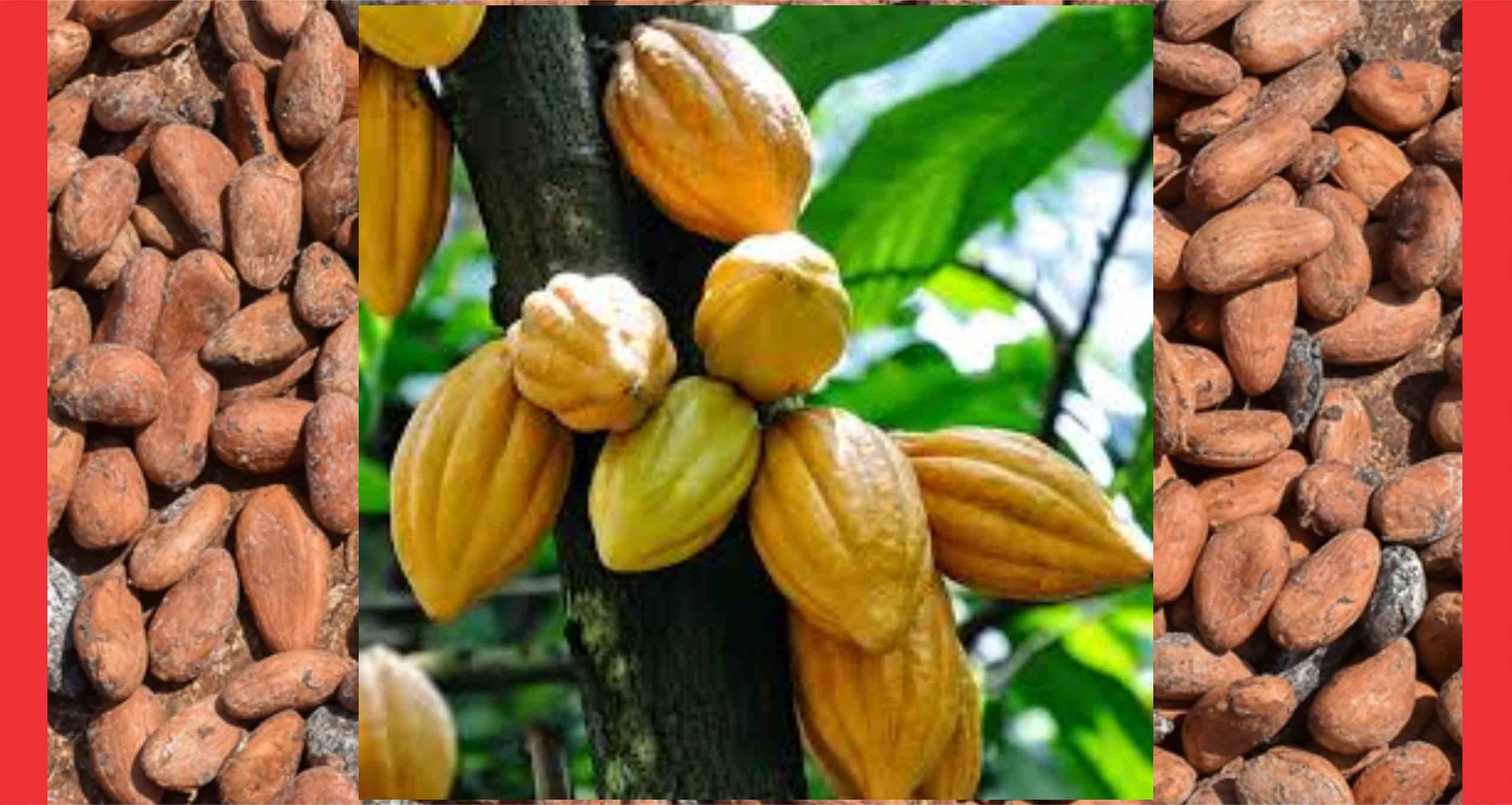
Cocoa Remains the Market’s Biggest Concern
Cocoa continues to face the highest supply risk among major agricultural commodities.
Although ICE-certified cocoa inventories have gradually recovered from historically low levels, traders remain cautious because production in Côte d’Ivoire and Ghana is still vulnerable to weather disruptions, disease pressure and aging plantations.
The market is also closely monitoring rainfall across West Africa as favourable weather over the coming weeks will be critical to the development of the 2026/2027 main crop.
At the same time, resilient processing demand from Europe, Asia and North America suggests that any improvement in production could be absorbed quickly, limiting the pace at which global inventories rebuild.
Coffee Faces Weather Uncertainty
Coffee remains another closely watched market.
Brazil’s production outlook continues to depend on weather conditions during key stages of crop development, while Vietnam’s robusta harvest will play an important role in determining global supply later in the season.
Although production has improved compared with previous years, traders remain alert to any weather event capable of tightening supplies again.
Wheat Market Watches the Black Sea
Global wheat supplies have become more comfortable following improved harvests in several producing regions, but risks have not disappeared.
Export flows from the Black Sea region remain an important factor for international grain markets, while weather conditions across Europe and North America continue to influence expectations for the current harvest.
For major wheat importers such as Nigeria, any disruption in these regions could usually translate into higher import costs leading to increased pasta.
Palm Oil Supply Improving
Palm oil markets have stabilised compared with the volatility experienced during previous years.
Production in Malaysia and Indonesia has generally improved, although labour availability, biodiesel policies and changing weather conditions remain important variables for the market.
Supply risks are therefore considered moderate rather than severe.
Rice Market Becoming More Stable
Rice supply conditions have improved following stronger production across several Asian producing countries.
While governments continue to monitor domestic food security and may adjust export policies when necessary, global availability has strengthened compared with recent years, reducing immediate supply concerns.
Cashew Market Still Worth Watching
For Nigeria, the cashew market deserves particular attention.
Weather conditions across West Africa, together with buying activity from Vietnam and India, continue to influence demand for raw cashew nuts. Although there is no immediate global supply crisis, changing weather patterns and stronger processing demand could tighten supplies later in the season.
Commodity Risk Snapshot
| Commodity | Current Supply Risk | Main Factors Being Watched |
| Cocoa | Very High | West African weather, disease, inventories, processing demand |
| Coffee | High | Brazil weather, Vietnam production |
| Wheat | High | Black Sea exports, harvest conditions |
| Palm Oil | Moderate | Biodiesel demand, labour, weather |
| Rice | Moderate | Asian production, export policies |
| Cashew | Moderate | West African weather, processor demand |
| Soybeans | Low | Strong South American harvest |
| Maize | Low | Improved global inventories |
What It Means for Nigeria
For Nigeria, the commodities attracting the greatest attention are cocoa, cashew, wheat and palm oil.
While a prolonged supply disruption in cocoa or cashew could be considered beneficial since it support export earnings by keeping international prices firm, tighter wheat supplies likely would negatively millers and food manufacturers through increased import costs. Palm oil remains important for both domestic food production and regional trade, making weather developments in Southeast Asia relevant to Nigerian businesses.
As weather patterns, shipping conditions and global demand continue to evolve, businesses that monitor supply risks early are often better positioned than those that react only after prices begin to move.
BuyerMetrics Bottom Line
The biggest opportunities and threats in commodity markets often emerge long before prices respond. Today’s market is being shaped less by what commodities cost and more by whether producers can sustain supply in the face of weather, trade disruptions and changing demand. For Nigerian exporters, importers and investors, watching these risks may prove more valuable than simply tracking daily price movements.