







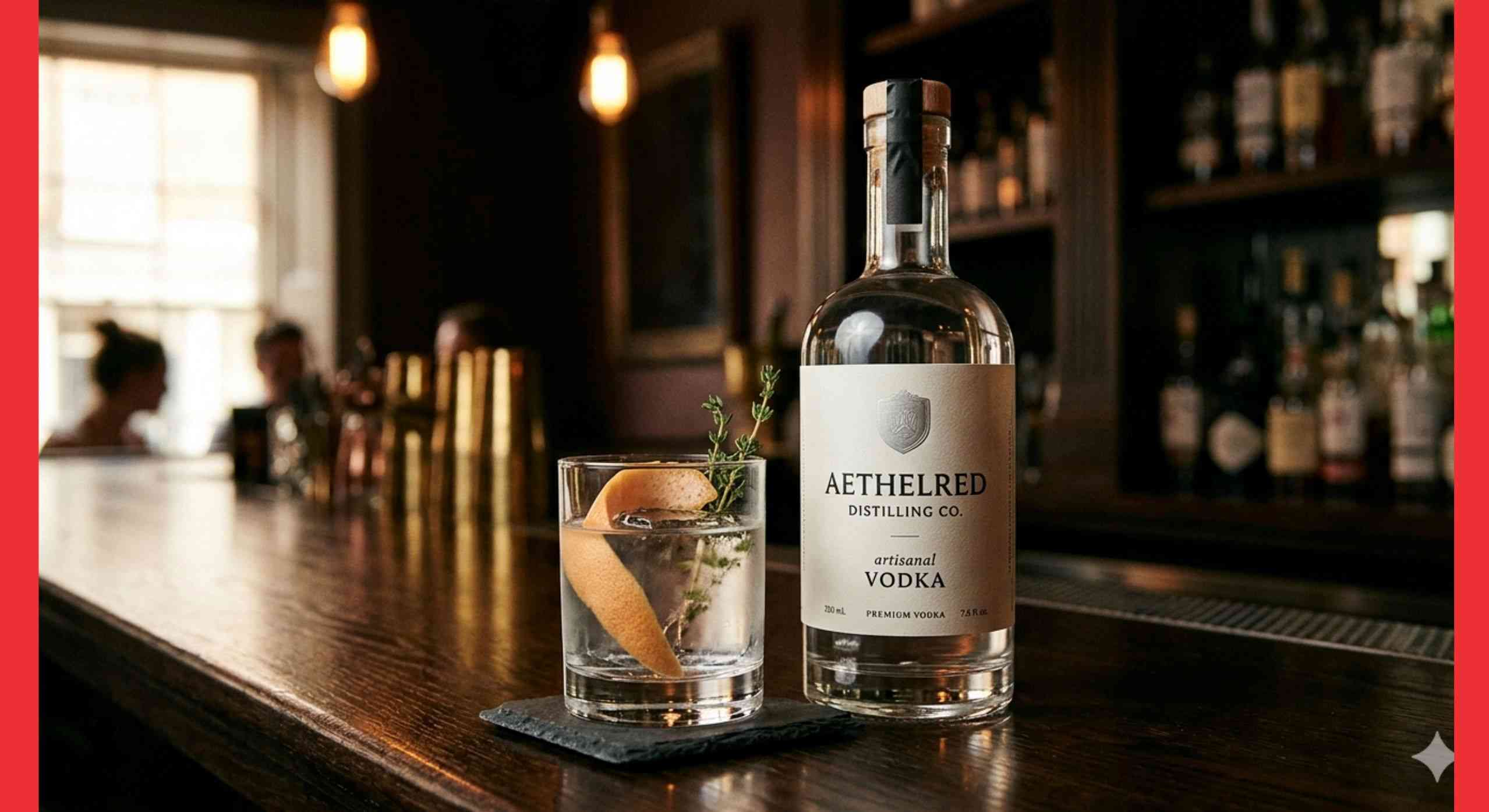
Vodka sits at the top of the global spirits hierarchy in a way few categories ever have. Wine-Searcher says the brand now accounts for more than 30% of global spirits consumption, powering a market valued at over $30 billion and projected to climb toward $54 billion within the next decade. It thrives across Europe, the United States, and Asia-Pacific, held together by cocktail culture and its unmatched flexibility. On the surface, the 14th century originated drink is not just growing; it is accelerating.
Yet beneath that expansion sits a contradiction. Search behavior has dropped sharply in recent years, not because consumers are abandoning vodka, but because they no longer need to look for it. The brand has crossed from curiosity into habit. It is no longer explored; it is assumed. People are not searching for vodka, they are reaching for it.
Nigeria’s Vodka Growth Is Functional, Not Emotional
That same pattern is playing out in Nigeria, but with a sharper, more practical edge.
BuyerMetrics’s visits to supermarkets and entertainment hubs shows Vodka consumption is rising steadily, yet it is not taking over the market. It holds position behind bitters, growing without becoming dominant.
The reason is simple and deeply behavioral.
Vodka is not winning because of brand storytelling or heritage. It is winning because of how it works.
OG Vybes – a major player in the Nigerian music production industry who speaks from Ogba, confirms two things consumers of the Eastern Europe originated drink have consistently point to. First, vodka delivers its effect immediately. Unlike some other spirits, the experience is not delayed. As it is consumed, the effect is already felt, which reduces the risk of overdrinking and the heavy after-effect many try to avoid.
Second, it mixes effortlessly. It allows drinkers to adjust taste in real time; switching between flavors, cocktails, and combinations depending on mood, setting, or company.
“Those of us that drink Vodka do so because of its lack of delayed effect. As you are drinking it, you are getting the effect, so it doesn’t leave after effect hangover on you.
“Secondly, the brand mixes well, so it gives you opportunity to shift taste as the mood dictates”; says OG Vybes
This is not about aspiration. It is about control, timing, and flexibility.
Vodka Wins in Urban Moments, but Price Defines the Boundary
Nowhere is this more visible than in cities like Lagos and Abuja, where drinking culture is increasingly shaped by social environments. The brand is gaining traction among young professionals and upwardly mobile consumers, not because it replaces other drinks, but because it fits the rhythm of urban life.
Its real strength shows up in moments. Inside clubs, at weddings, across parties, and throughout festive cycles, vodka becomes the base of the experience rather than the focus of it. It blends into cocktails, adapts across occasions, and allows drinkers to pace themselves while staying in control.
But price quietly determines how far this growth can go.
A 1-litre bottle of Absolut Vodka typically sits between ₦16,500 and ₦21,000, with mainstream retail clustering around ₦17,600 to ₦20,930 depending on the outlet. Flavoured variants – Citron, Vanilia and Raspberri, hover closer to ₦19,000, while even smaller formats (20cl) still cost ₦2,500 to ₦4,300, keeping entry points relatively high.
Related – 7 Reasons Why Standard Chartered Is Preferred For Capital Importation To Nigeria
Other brands reinforce the ceiling. A 70cl bottle of Skyy Vodka is already priced around ₦22,500 in some outlets, pushing it firmly into premium territory.
These are not mass-market price points. They position vodka as:
- A planned purchase, not an impulse buy
- A shared social drink, not an everyday staple
- A status-aligned choice, especially in group settings
Even within urban consumption, pricing creates a natural filter, one that keeps vodka concentrated among those who can afford to sustain the habit.
The Constraint: Why Vodka Remains Selective
For all its momentum, vodka is not becoming a mass-market drink in Nigeria. The constraint is structural. Most consumers operate within tight budgets, and that reality favors bitters and lower-cost spirits that deliver both perceived value and effect at a lower price point.
Vodka’s pricing reinforces that divide. Inflation and currency pressure continue to push retail prices upward, sometimes by 5% to 20%, making consistency of consumption even harder for the average drinker.
The result is a category that grows, but selectively.
It expands within urban, social, and premium circles, rather than across the broader population. It thrives in occasions, not in routine.
BuyerMetrics Bottom Line
Vodka is not growing in Nigeria because it is exciting. It is growing because it is functional but filtered by price.
Globally, vodka has become a default choice; familiar, accessible, and embedded in drinking culture. In Nigeria, that evolution is more precise. The category is rising not through mass adoption, but through relevance in specific moments and among specific consumers who can afford it.
The insight is clear:
Vodka wins because it delivers immediate effect, flexible taste, and controlled experience, but only within a defined economic bracket.
It is not the loudest drink in the room. But increasingly, it is the one shaping how the room drinks – just not every room.