




LAGOS, NIGERIA – Oil prices climbed sharply on Thursday after renewed attacks on Saudi oil tankers in the Red Sea and escalating tensions between the United States and Iran heightened fears of supply disruptions, lifting Brent crude close to $100 per barrel just as Nigeria’s crude oil production reached a six-year high.
West Texas Intermediate (WTI) crude rose nearly 4% to around $90 per barrel, extending gains for a fifth consecutive trading session and reaching its highest level since June 10. Brent crude climbed about 5% to around $98.50 per barrel, its strongest level since late May.
The latest rally represents a significant rebound from early July levels. WTI traded at $68.74 per barrel on July 6, while Brent was around $76, meaning the rally has added more than $22 per barrel to Brent crude and over $21 per barrel to WTI since July 6, underscoring how quickly geopolitical tensions have reshaped market expectations.
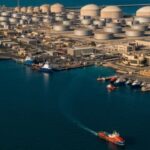
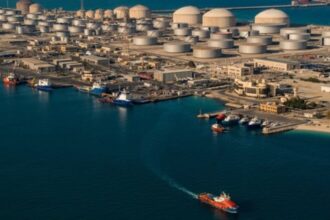
The latest surge followed reports from the UK Maritime Trade Operations agency that a tanker caught fire after being struck about 70 nautical miles southwest of Al Shuqaiq in Saudi Arabia.
Yemen’s Houthi movement claimed responsibility, saying it had targeted two Saudi oil tankers, Encelia and Layla, using drones and missiles after accusing them of violating its declared naval blockade in the Red Sea.
According to reports, one tanker was transporting Saudi crude oil to India, while the other was carrying cargo destined for China.
India and China are among the world’s largest crude oil importers, making any disruption to shipments toward Asia closely watched by energy markets.
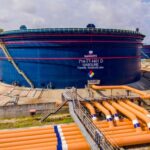
The attacks come at a particularly sensitive time for global energy markets. According to Oilprice.com, Saudi Arabia has redirected more than 70% of the crude exports that previously passed through the Persian Gulf to the Red Sea export terminal at Yanbu, making the Bab el-Mandeb Strait increasingly critical to global oil flows.
Reports that at least two commercial tankers turned away from the strategic chokepoint have intensified concerns that further disruptions could tighten global crude supplies.
Geopolitical tensions also escalated after US President Donald Trump warned that the United States would strike Iranian infrastructure, including bridges or power plants, whenever Tehran-backed forces attacked vessels transiting the Strait of Hormuz.
Iran responded by threatening retaliation against US-linked infrastructure and energy facilities across the region should Washington carry out its warning, increasing fears that the conflict could spread further across one of the world’s most important energy-producing regions.
OPEC Sees Slower Demand
The latest price rally comes despite weaker demand expectations.
OPEC lowered its forecast for global oil demand growth in 2026 by 190,000 barrels per day, bringing expected growth down to 780,000 barrels per day.
The producer group, however, maintained a more optimistic longer-term outlook, raising its forecast for 2027 demand growth by 210,000 barrels per day to 1.94 million barrels per day, reflecting expectations of stronger consumption beyond the current year.
The contrasting signals suggest that markets are currently placing greater weight on potential supply disruptions than on slowing global consumption.
Implications for Nigeria
Nigeria enters the latest oil rally from a stronger production position than it has enjoyed in years.
According to figures released by the Nigerian Upstream Petroleum Regulatory Commission (NUPRC), the country produced an average of 1.56 million barrels of crude oil per day in June 2026, exceeding its 1.5 million barrels per day OPEC production quota for the fourth consecutive month.
When condensate production of about 180,000 barrels per day is included, Nigeria’s total liquids output reached 1.74 million barrels per day in June.
The June crude production level marks Nigeria’s highest output since April 2020, representing a 74-month high, following improved operational stability, reduced pipeline disruptions and better security around oil infrastructure.
The timing could prove significant. With Brent crude trading close to $100 per barrel, every additional barrel produced has greater revenue potential for the government, provided production levels remain stable and exports continue uninterrupted.
BuyerMetrics Bottom Line
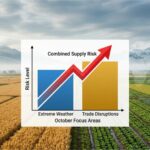
The oil market is currently being driven more by geopolitical risk than by demand fundamentals. While OPEC has lowered its forecast for global oil demand growth, traders are focused on the possibility of supply disruptions in two of the world’s most important shipping corridors.
For Nigeria, the timing is favourable. The country is producing 1.56 million barrels per day, its highest crude output in more than six years, just as Brent crude approaches $100 per barrel. If production remains above quota and exports continue without disruption, Nigeria stands to benefit from stronger oil revenues. The challenge will be ensuring that those gains are not offset by higher domestic fuel costs and inflation.