







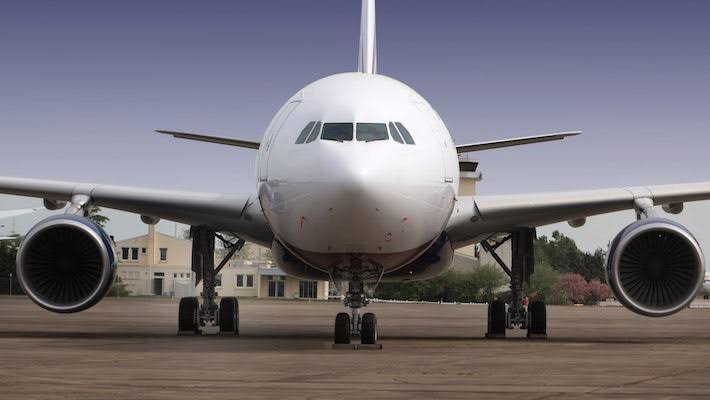
Global air passenger traffic (Global Air Travel) declined sharply in April 2026 as escalating conflict in the Middle East disrupted major international travel corridors, weakened airline demand, and pushed operating costs higher across the aviation industry.
New data released by the International Air Transport Association showed that global passenger demand, measured in revenue passenger kilometres (RPK), fell 3.4% year-on-year in April 2026, marking one of the sector’s most significant demand slowdowns since the post-pandemic recovery accelerated.
The decline came as passenger demand for Middle Eastern carriers collapsed by 46.6%, severely disrupting one of the world’s most important international transit regions and dragging down overall global aviation performance.
Excluding the Middle East, global passenger demand would have grown by 1.2%, underscoring the extent to which geopolitical instability in the region distorted worldwide air travel activity.
At the same time, airlines faced mounting cost pressure after jet fuel prices more than doubled during the month, increasing concerns about higher airfares, weaker bookings, and slower traffic growth in the months ahead.
Global airline capacity, measured in available seat kilometres (ASK), declined 2.9% year-on-year, while the industry-wide passenger load factor slipped 0.4 percentage points to 83.1%.
Willie Walsh, Director General of IATA, warned that the aviation market remains highly volatile as airlines attempt to balance rising fuel costs against weakening passenger demand.
“The cost of jet fuel more than doubled in April, which is pushing airfares up,” Walsh said, adding that forward schedule data already points to reduced airline capacity in coming months as carriers scale back operations to manage costs.
Middle East aviation collapse reshapes global airline traffic
International passenger demand fell 5.3% globally in April as the aviation impact of the Iran-related regional conflict intensified.
Middle Eastern airlines recorded the sharpest decline globally, with passenger traffic plunging 48.1% year-on-year while capacity fell 38.4%. Regional load factors dropped to 70.1%, down 13.1 percentage points from the previous year.
IATA said the aviation downturn was directly linked to the ongoing regional conflict, although the pace of deterioration slowed slightly compared to March following the implementation of a fragile ceasefire.
The disruption is also reshaping global travel patterns and rerouting passenger flows away from traditional Middle Eastern transit hubs.
European airlines benefited from the shift, with direct Europe-Asia passenger traffic rising 15.3% as travellers increasingly bypassed Middle Eastern connecting routes.
Related – African Air Cargo Demand Climbs 7.7% Despite Capacity Crunch – IATA
European carriers posted a 0.9% increase in international demand, while Asia-Pacific airlines recorded 3.0% growth and achieved a record April load factor of 87.5%, the highest among all major aviation regions.
Latin American airlines emerged as the fastest-growing regional market globally, with passenger demand climbing 8.9% year-on-year alongside strong capacity growth.
African airlines also continued expanding, recording a 2.2% increase in passenger demand and a 77.9% load factor as regional aviation recovery remained resilient despite global volatility.
North American airlines, however, reported flat international demand as softer consumer spending and economic uncertainty weighed on travel activity.
Airlines cut schedules as fuel costs and weaker bookings pressure profitability
Domestic passenger traffic globally remained flat in April as slowing demand in major markets offset gains elsewhere.
While China, Brazil, and Japan continued recording domestic passenger growth, declines in the United States, India, and Australia weakened overall market performance.
India recorded a 2.9% decline in domestic passenger demand despite continued capacity expansion, while the United States posted a 0.6% traffic decline as airlines adjusted to softer booking trends.
Japan remained one of the few major markets to improve domestic load factors despite reducing capacity for eight consecutive months.
Industry analysts say the latest figures highlight growing risks for airline profitability as geopolitical disruptions, fuel price spikes, and weaker consumer demand increasingly converge on the aviation sector.
The data also reinforces the strategic importance of Middle Eastern aviation hubs to global connectivity, with disruptions across the region now materially affecting airline route economics, international transit flows, and capacity planning worldwide.
With forward schedule data already pointing to lower seat availability in coming months, airlines are expected to continue reducing frequencies, adjusting routes, and increasing fares to offset rising operating expenses.
BuyerMetrics Bottom Line
The April 2026 aviation data signals a major shift in global airline market dynamics as conflict in the Middle East disrupts one of the world’s most critical transit regions. The collapse in passenger demand among Middle Eastern carriers was large enough to push the entire global aviation market into contraction despite continued growth across Africa, Asia-Pacific, Europe, and Latin America. At the same time, surging jet fuel prices and weaker forward bookings are forcing airlines to cut schedules and raise fares, increasing pressure on profitability and passenger demand. Airlines with diversified route networks, lower fuel exposure, and flexible capacity management are likely to be better positioned as volatility across global aviation markets intensifies.