





Today’s Exchange Rate Dashboard
| Market | Rate | Previous | Change |
| Official (NFEM) | ₦1,368.22/$ | ₦1,367.34/$ | +0.06% |
| Parallel Market (Buy) | ₦1,400.00/$ | ₦1,405.00/$ | –0.36% |
| Parallel Market (Sell) | ₦1,415.00/$ | ₦1,415.00/$ | 0.00% |
| Official-Parallel Spread | ₦31.78 | ₦37.66 | -15.61% |
Source: Central Bank of Nigeria (Official NFEM); BuyerMetrics Market Survey (Parallel Market).
Official Reference Rates
| Currency | Central Rate |
| Euro (€) | ₦1,573.29 |
| British Pound (£) | ₦1,837.13 |
| Chinese Yuan (¥) | ₦202.57 |
Source: Central Bank of Nigeria.
Market Overview
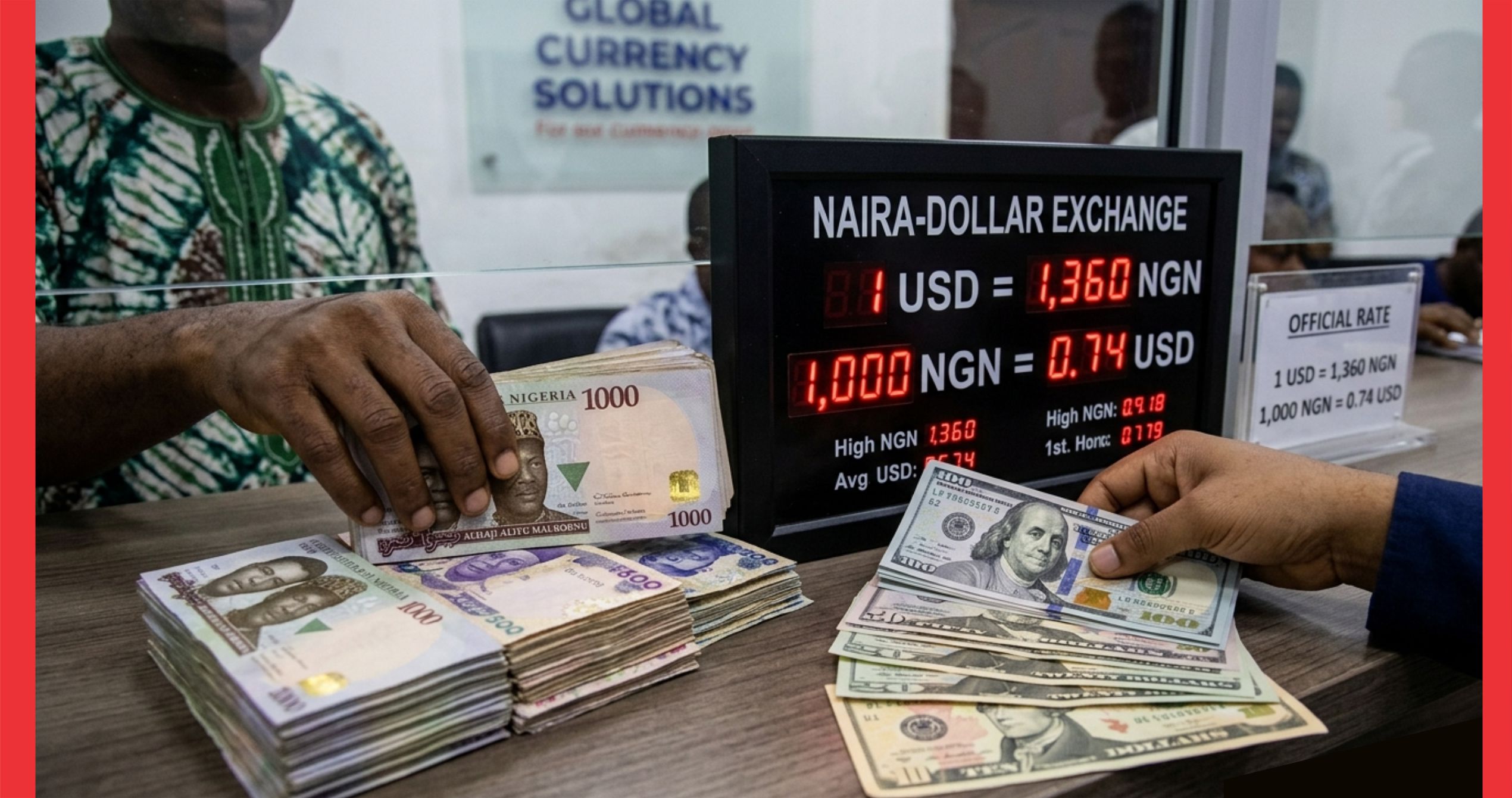
The naira weakened marginally in the official Nigerian Foreign Exchange Market (NFEM) on Monday, trading at ₦1,368.22 per US dollar from ₦1,367.34 in the previous session.
In the parallel market, however, the buying rate improved to ₦1,400.00 per dollar from ₦1,405.00, while the selling rate remained unchanged at ₦1,415.00. The improvement in the buying rate narrowed the gap between the official and parallel markets, suggesting slightly better sentiment in the retail foreign exchange market.
The official-parallel spread narrowed to ₦31.78, indicating that although pressure on the naira persists, the divergence between the two markets eased compared with the previous trading session.
Key Market Drivers
The foreign exchange market continued to respond to several domestic and global factors, including:
- Dollar liquidity within the official Nigerian Foreign Exchange Market (NFEM).
- Demand for foreign currency from importers, manufacturers and travelers.
- Brent crude oil trading around $84 per barrel, influencing Nigeria’s foreign exchange earnings.
- Nigeria’s external reserves, which stood at $51.92 billion.
- Global demand for the US dollar and expectations around international monetary policy.
Why It Matters
With inflation, foreign investment and fiscal stability dominating Nigeria’s economic conversation, movements in the exchange rate remain a critical barometer of market confidence. A narrower official-parallel market spread can indicate improving access to foreign exchange and stronger confidence in official market reforms.
For businesses, households and policymakers alike, the challenge is to sustain this momentum through stronger export earnings, improved foreign exchange supply and policies that encourage investment while reducing pressure on the naira.
BuyerMetrics Market Watch
Monday’s trading presented a more balanced picture of Nigeria’s foreign exchange market. While the official market recorded only a slight depreciation, the improvement in the parallel market buying rate reduced the spread between the two markets.
The narrowing spread will be an important indicator to monitor throughout the week. If sustained, it could point to improving liquidity and stronger confidence in the official market. However, movements in crude oil prices, foreign exchange supply and demand for US dollars will remain critical factors influencing the naira’s direction.
Quick Market Snapshot
| Indicator | Value |
| Official (NFEM) | ₦1,368.22/$ |
| Parallel Market (Buy) | ₦1,400.00/$ |
| Parallel Market (Sell) | ₦1,415.00/$ |
| Official-Parallel Spread | ₦31.78 |
| Brent Crude | $84.00/barrel |
| External Reserves | $51.92 billion |
| Market Sentiment | Improving |
Looking Ahead
Market participants will be watching whether the improvement in the parallel market buying rate continues over the coming trading sessions. The trajectory of foreign exchange liquidity, demand for US dollars, developments in the global oil market and any policy signals from the Central Bank of Nigeria will remain key factors shaping the naira’s performance this week.
BuyerMetrics Bottom Line
Although the official market recorded a marginal weakening of the naira, Monday’s trading offered an encouraging sign as the parallel market buying rate strengthened and the gap between the two markets narrowed. Maintaining this momentum will depend on sustained foreign exchange liquidity and stable oil export earnings, both of which remain crucial to Nigeria’s currency outlook.






 rate, black market rates, official reference rates, and BuyerMetrics' analysis of what the latest forex movements mean for Nigeria's economy)