LAGOS, Nigeria – The latest crackdown on counterfeit toothpaste in northern Nigeria has exposed a supply-chain route that could have implications for consumers and legitimate FMCG manufacturers across the country.
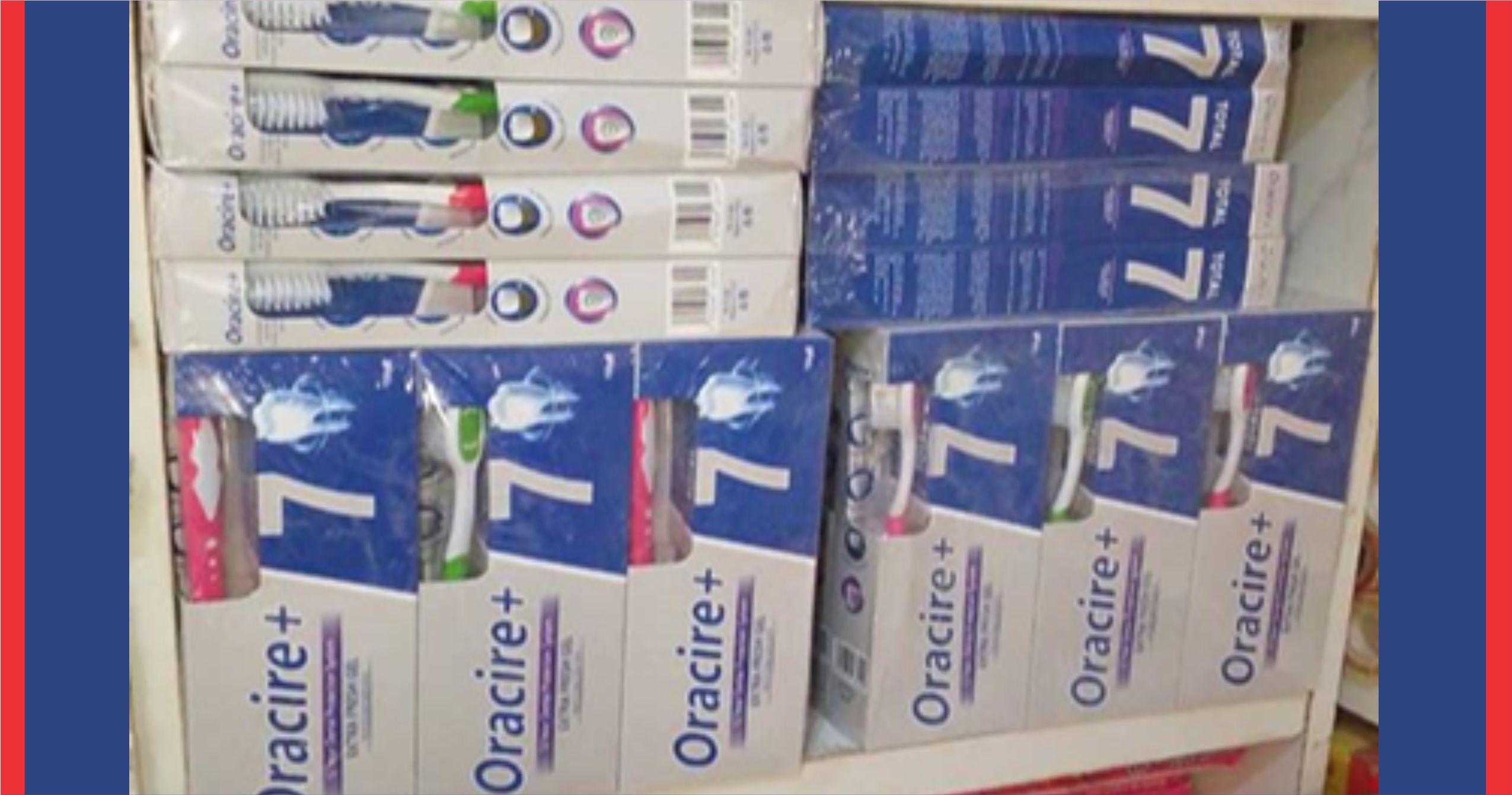
The National Agency for Food and Drug Administration and Control (NAFDAC) uncovered suspected counterfeit toothpaste products during enforcement operations in Kano and Sokoto, including 70 cartons identified in enforcement reports as “Oracire+” toothpaste. Investigators reportedly traced the products to a supplier in Sokoto who admitted that the goods were imported from China.
The operation began in Sabon Gari Market, Kano, where NAFDAC arrested a suspected distributor. Further investigation led officers to A.S. Assada Investment Company Limited in Sokoto, where a warehouse search uncovered hundreds of cartons of suspected counterfeit oral-care products across several brands.
The scale of the seizure is significant because the products were not limited to one brand. The warehouse reportedly contained 75 cartons of Xtrene Activated Charcoal Whitening Boost, 33 cartons of Claso-up, 131 cartons of Duarbar Herb’l, 55 cartons of Orell-B Pro-Expert and 70 cartons of the product identified as Oracire+, among others.
A genuine Nigerian brand caught in the counterfeit supply chain
ORACARE+ itself is a legitimate Nigerian toothpaste brand manufactured by Aspira Nigeria Ltd.
Aspira, whose headquarters and manufacturing plant are in Kano, introduced ORACARE+ in 2021. The company currently lists the toothpaste among its products and says its manufacturing facility produces toothpaste alongside other personal-care products.
The Nigerian Dental Association also lists ORACARE+, ORACARE+ Charcoal and ORACARE+ Red among its endorsed toothpaste products, with Aspira Nigeria Ltd. identified as the manufacturer.
This makes the distinction between the genuine product and the suspected counterfeit particularly important.
There is also a spelling discrepancy in the publicly available reports. Aspira and the Nigerian Dental Association consistently identify the genuine brand as ORACARE+, while reports of the NAFDAC seizure refer to “Oracire+.” BuyerMetrics could not independently establish from the publicly available enforcement material whether this represents the actual spelling on the seized counterfeit product or an error in reporting.
What the seizure says about Nigeria’s FMCG supply chain
The development points to a growing challenge for consumer-goods manufacturers: counterfeit products can enter the market through distribution networks that are difficult to distinguish from legitimate wholesale channels.
In this case, the publicly reported trail runs from an alleged Chinese import source to a Sokoto warehouse and then to a distributor operating in Kano.
That matters because Kano is not simply another consumer market. It is one of northern Nigeria’s major commercial and distribution centres. It is also home to Aspira’s manufacturing operations.
The counterfeit network therefore appears to have intersected with one of the country’s established FMCG corridors.
NAFDAC’s investigation is still ongoing, so the full distribution footprint remains unknown. It is also not yet established from the available information whether the suspected products reached other major markets such as Lagos, Abuja or other parts of the country.
The unanswered supply-chain questions
For consumers, the immediate concern is authenticity.
For manufacturers and distributors, however, the more important questions are broader:
- Where did the products enter Nigeria?
- Which import channels were used?
- How long had the products been in circulation?
- Which wholesale markets received them?
- Did the products move beyond Kano and Sokoto?
- How can legitimate distributors distinguish the products from genuine stock?
These questions are likely to become more important as counterfeit consumer products increasingly move through complex national distribution networks.
NAFDAC has directed its zonal directors and state coordinators to investigate the availability and distribution of the suspected product and take appropriate regulatory action.
Consumers have also been advised to buy toothpaste only from reputable and authorised outlets and to examine packaging and the source of supply before purchasing.
BuyerMetrics Market Watch
The immediate lesson from the NAFDAC operation is that counterfeit risk is no longer simply a question of what product is fake.
It is also a question of how the fake product moves.
The Kano-Sokoto operation provides an early glimpse of that movement. A suspected imported counterfeit product was found alongside several other falsified toothpaste brands, suggesting that counterfeit FMCG distribution may operate through networks handling multiple products rather than isolated brand-specific operations.
For Nigeria’s FMCG market, the next important development will therefore be whether NAFDAC’s investigation identifies additional distributors, markets or states connected to the seized products.